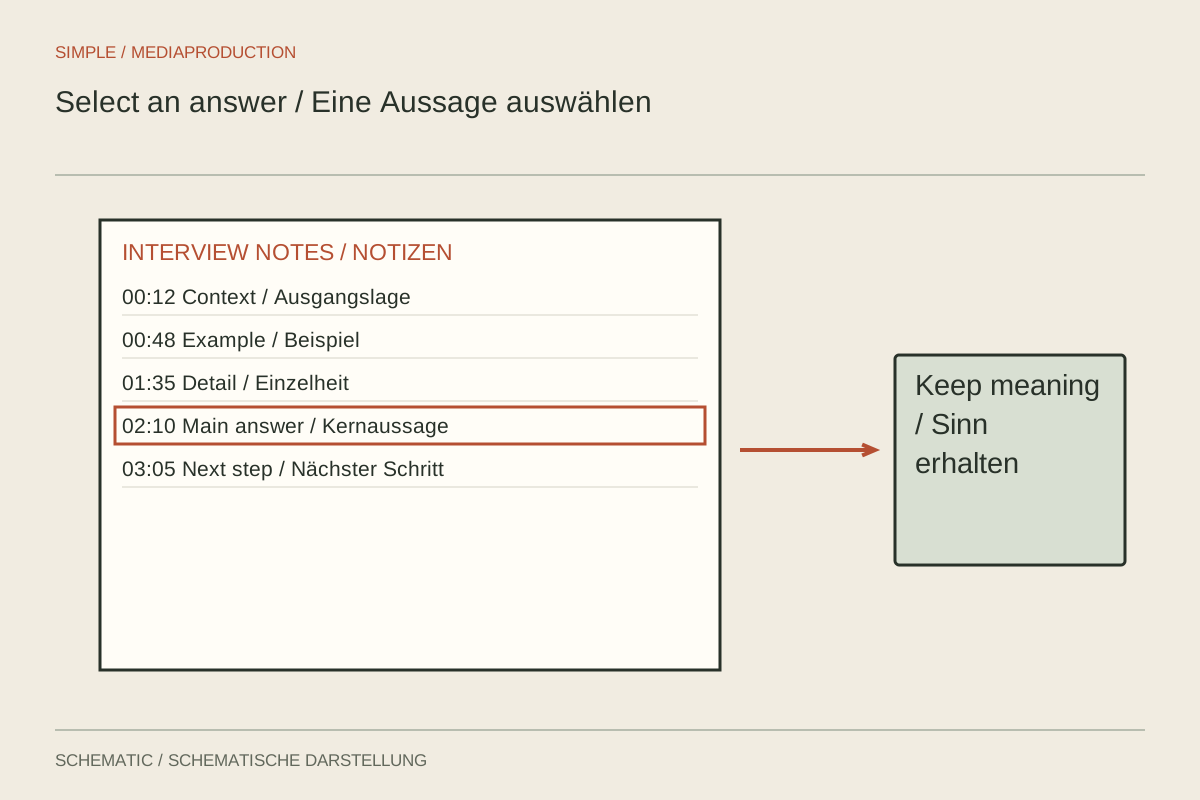
Only a few minutes may survive from a long interview. Selection therefore starts with which statements support the planned piece, not merely the shortest or most striking sentences. An isolated memorable phrase can mean something different without its qualification. Listen to candidates with the preceding and following context every time.
Mark statements by content
During the first pass, mark topics, examples and clear explanations. Also note technical problems such as rustling or an interrupted answer. A particularly clear statement with a small visual flaw may be more valuable than an immaculate clip containing little specific information.
A transcript makes terms easier to find. Automatic recognition can misrepresent names, numbers and negatives, however. Check each selected passage against the original sound. Written words also do not reliably convey hesitation or irony, which may be essential to meaning.
Select complete thoughts
Find an opening that remains understandable without the removed question. An answer beginning “Yes, precisely because of that” may lack its reference. Keeping a brief question or choosing another complete answer can be cleaner. Do not manufacture a new statement from unrelated fragments.
Preserve conditions and qualifications that belong to the claim. “It works on this model” must not become a general assertion about every model through trimming. Removing a time reference can also alter meaning. Assess the selection from the perspective of someone who will never hear the whole interview.
Build a selects sequence before fine editing
Collect useful passages in a separate sequence with source references and some material before and after. Arrange them by subject without altering originals. This allows similar answers to be compared before deciding final order. Name selections by content rather than simply good or best.
Listen to the eventual combination without pictures. Does it form a coherent and accurate explanation? Then inspect visible reactions and cuts. Relevant B-roll can conceal a visual jump, but cannot legitimise a distorted statement. Retain the selects sequence so questions can be traced quickly to the complete context.