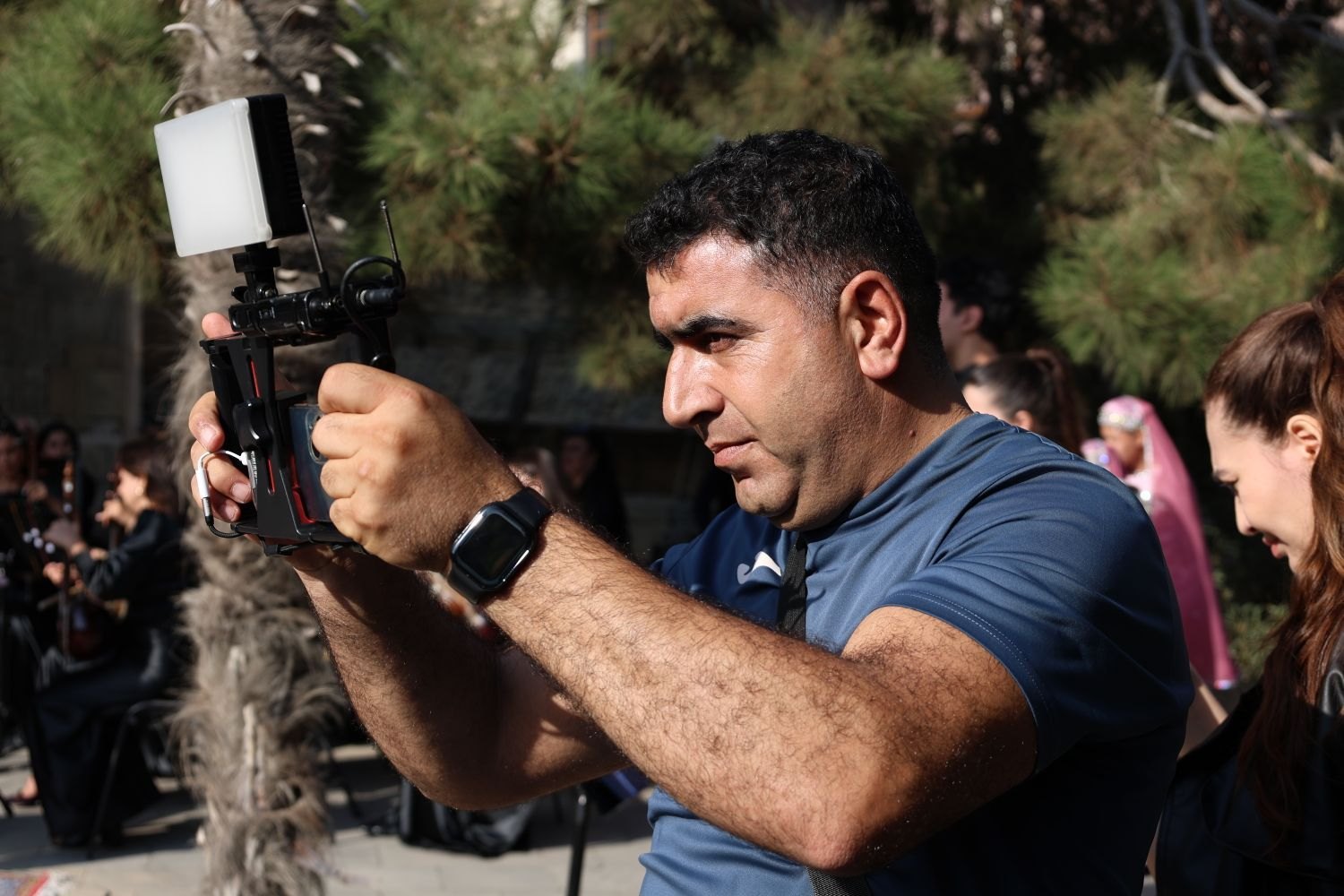
Handheld filming can create closeness and mobility, but constant instability does not make it convincing. Decide whether you are following a person, revealing an object or simply holding a short static composition without a tripod. That purpose determines posture, focal length and route. A deliberately simple shot is often easier to control than a long sequence of improvised direction changes.
Use your body as a connected support
Avoid carrying the camera only at the end of outstretched arms. Closer to the body, small movements are often easier to manage. A second hand beneath the lens or on an intended grip supports the camera without blocking controls. Adopt secure footing and avoid a position that causes fatigue after only a few seconds of recording.
Test the composition at the actual focal length. Long lenses amplify the visible effect of small angular movements. A wider view may provide more tolerance, but should not make the subject too small to understand. If a detail must remain completely steady, fixed support or a tripod may be more suitable. Choose according to the shot rather than a commitment to film everything handheld.
Prepare movement instead of inventing it mid-take
Walk a planned route without recording first. Check the floor, doors and pedestrian traffic. Walking backwards while watching a monitor requires particular care and may need another person watching the route. A camera move is not worth a fall. Choose a different path if it cannot be monitored safely and clearly.
Start and finish with a brief settled moment. During the move, consistent body movement helps more than frantic wrist corrections. Very long takes increase the chance of fatigue and directional mistakes. Divide an explanation into several deliberately composed sections when appropriate, making sure they can later connect coherently rather than relying on one ambitious uninterrupted move.
Check stabilisation for side effects
Optical, sensor-based and electronic stabilisation behave differently. Electronic methods may crop the frame; in some situations, edges or perspective can move unnaturally. Test a clip containing both near and distant objects rather than only a flat wall. A level horizon does not prove that every region of the picture looks natural throughout the movement.
Judge the recording at normal playback speed. Slight movement may feel appropriate while one abrupt bump disrupts the entire clip. Do not try to turn every handheld shot into a perfectly locked image afterwards. Prefer the take with the clearest movement and sufficient framing margin if restrained post-production stabilisation becomes necessary.