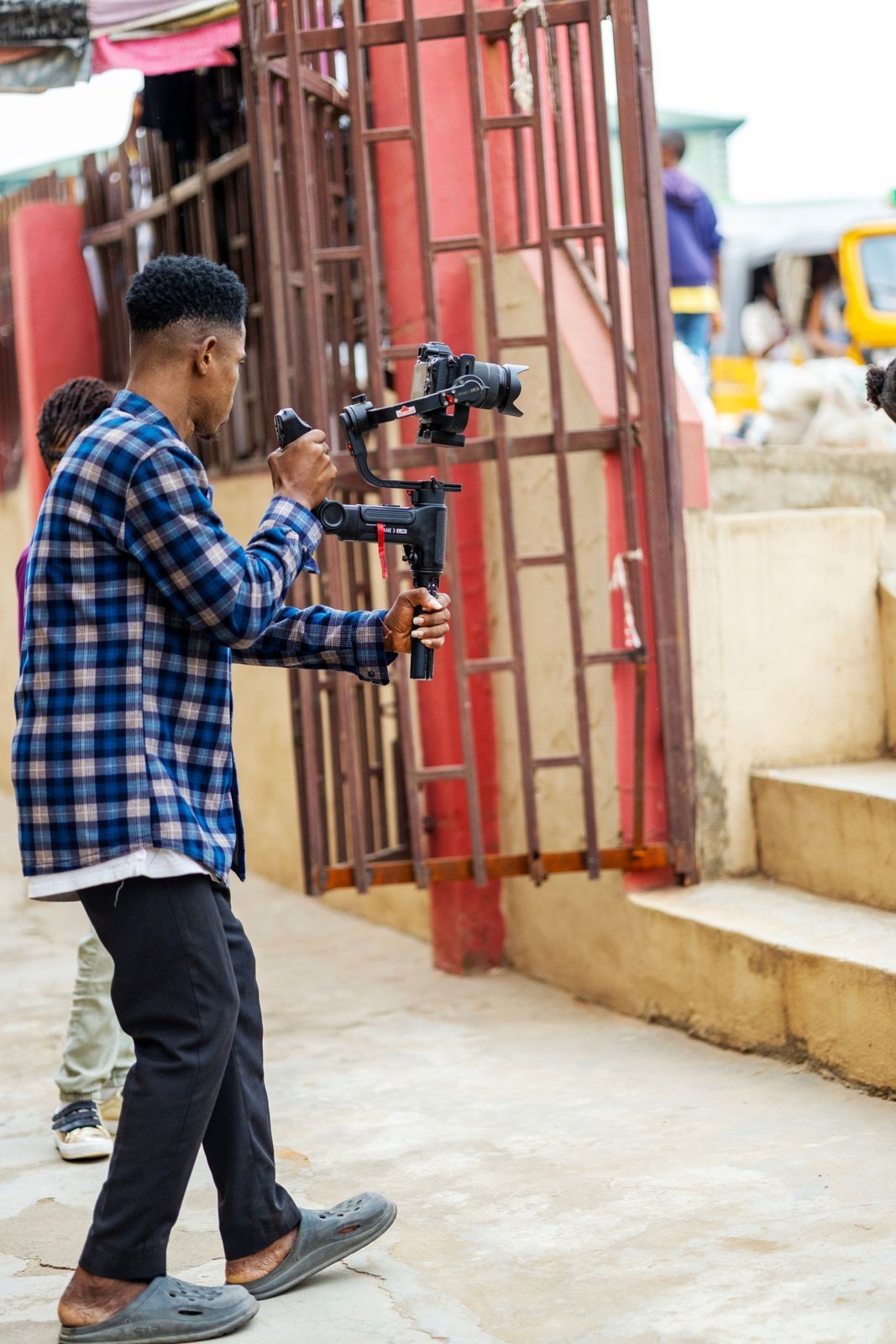
A gimbal can stabilise a camera's orientation while the operator walks. It does not automatically make every movement smooth or meaningful. Vertical footsteps, abrupt direction changes and an unclear composition remain visible. First identify which shot would otherwise be difficult to achieve reliably. For a fixed tabletop explanation, a tripod may be quicker and more appropriate.
Assess the benefit for a specific move
A slow tracking shot along a workstation can reveal spatial relationships. Moving through a doorway can introduce another area. If the movement supplies no additional information, the gimbal mainly adds setup and rehearsal. Compare a short trial with a static shot before designing the entire sequence around camera motion.
Consider the route beyond the frame. A wide grip or side motor can strike a doorframe or nearby object. Allow clearance and do not watch only the monitor. Another person can help with navigation on an obscured route. A stabilised camera should not cause its operator to pay less attention to safe footing and the surrounding space.
Balance the complete camera package
Fit the lens, filter, card, battery and required cables before balancing. Adding them afterwards shifts the centre of gravity. Follow the manufacturer's axis sequence and check whether the camera remains reasonably stable in the specified positions. Being below the weight limit does not guarantee that a long or unusually shaped combination will physically fit and balance.
Cables must not pull or obstruct the axes. Check the movement range with the system switched off or prepared as instructed by the manufacturer. Calibration and motor tuning should follow a sound mechanical balance. Stronger motor settings are not a substitute for a poorly mounted camera. Recheck balance after changing a lens or another significant accessory.
Choose the appropriate follow mode
A mode following only horizontal rotation behaves differently from one also following tilt. Choose according to the route, not the most conspicuous effect. Test the start, direction changes and finish. An overly sensitive response may transmit small hand movements; a very slow response may lag behind the subject at an important turn.
A gimbal does not automatically remove walking bounce. Controlled steps and suitable posture still matter. On a difficult route, a shorter shot or another camera position may improve the result more than further menu adjustments. Review the whole recorded move rather than judging only its calmest middle section.
Weigh effort against repeatability
Allow time for balancing, testing and battery changes. During an unrepeatable event, preparation must not cause the essential action to be missed. Keep a simple alternative available when necessary. The gimbal helps when the intended move succeeds consistently and supports the explanation, not merely because the device happens to be part of the equipment kit.