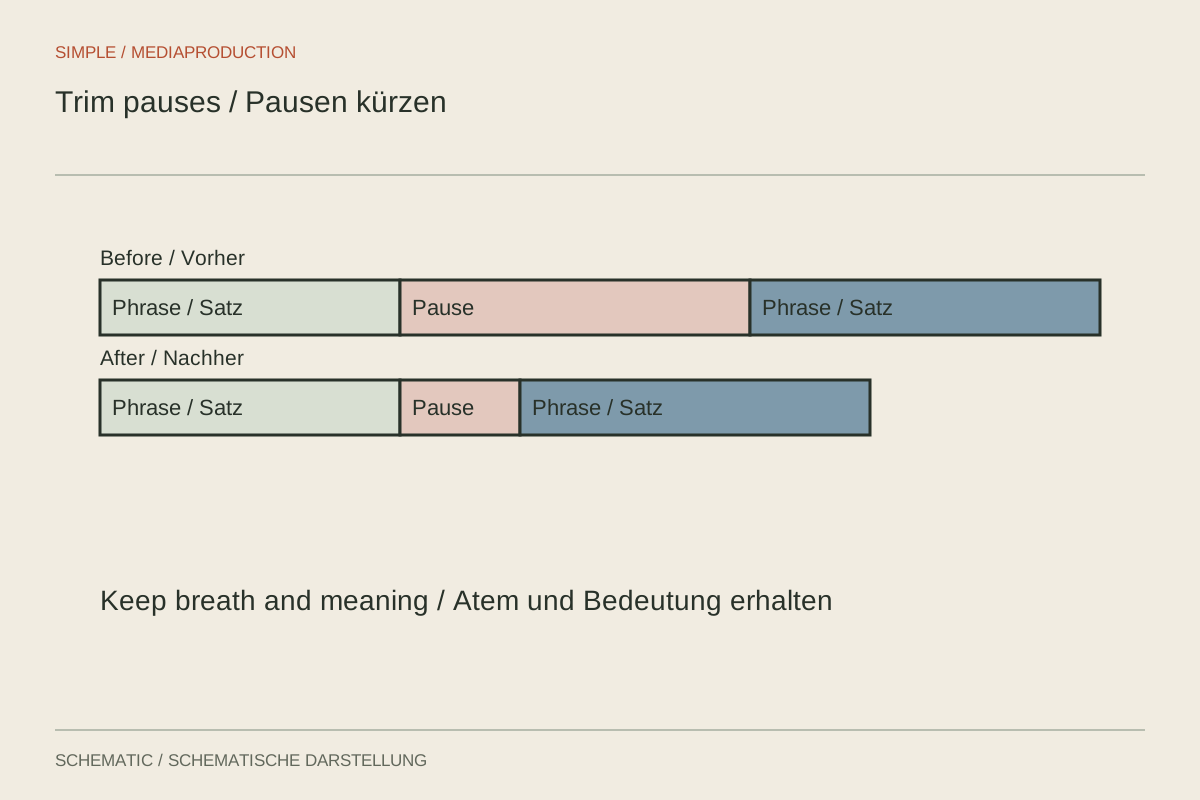
Three seconds of silence separate two sentences. This may be unnecessary waiting, or deliberate reflection before a difficult statement. Duration alone therefore does not determine what to cut. Listen to the pause's function and the delivery on either side. Automatically removing a quiet region can change an answer's character.
Separate dead time from speech rhythm
Waiting for a technical instruction can often be shortened substantially. A brief breath between two long clauses helps the audience follow. First mark moments that genuinely slow the piece. Do not remove every visible waveform gap simply because it exists.
Consider the picture too. A speaker may raise their eyes, smile or search for a word. Compressing the sound heavily can make the associated movement jump. Relevant B-roll may ease the visual transition, but should not turn visible consideration into apparently effortless certainty.
Preserve the surrounding sound
Leave enough room around both sentences to retain consonants and breathing. Short crossfades can prevent clicks. If room sound disappears abruptly, add matching room tone. A pause does not need to reach digital silence to be perceived as a pause.
Listen to the new join repeatedly at normal speed. If the second sentence begins too early, the speaker seems unable to breathe. Leaving half a breath can sound less natural than the original longer gap. Adjust small regions deliberately rather than accelerating the entire answer uniformly.
Check the first consonant after every shortened gap on headphones; a clean-looking waveform boundary may still remove the quiet beginning of a word.
Recheck the meaning
A pause before “but” or “only under this condition” may introduce an important qualification. Editing must not weaken that connection. Play the whole answer and assess whether tone and meaning still agree. A shorter video is not automatically clearer.
Keep an untrimmed selects sequence for comparison. If later music or pictures change the rhythm, some original space may be needed again. Also review automated pause removal individually. It can locate gaps, but cannot reliably decide which silence the content needs.