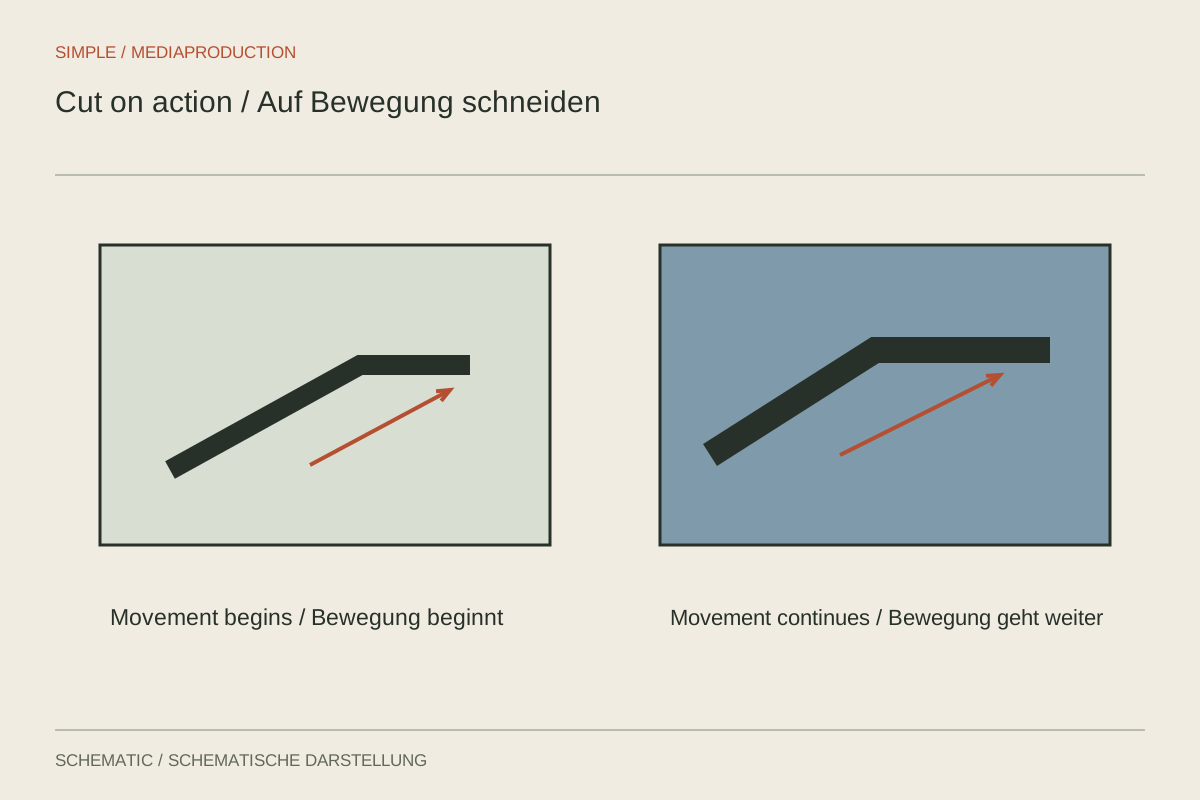
A hand reaches for a tool in a wide shot. The next view shows the tool more closely. If both views continue the same action coherently, the cut becomes less noticeable. They do not necessarily need to end and begin at precisely identical visible positions. What matters is the perceived action at normal playback speed, not merely an attractive comparison of two still frames.
Divide movement into phases
Consider preparation, movement, contact and result. Opening a drawer involves raising the hand, gripping the handle, pulling and revealing the open drawer. Choose a cut where the second view adds information. A close-up might show the grip that appears only small in the wide shot.
Check direction and speed. If the hand moves right in one view and suddenly left in the next, the action can appear contradictory. A new camera angle must preserve understandable spatial orientation. Differences between repeated takes are particularly visible in hands and small objects.
Judge overlap by playback
Initially place both actions together with some extra material. Move the cut a few frames and repeatedly play it at normal speed. A small temporal overlap can sometimes feel smoother than strict frame-by-frame continuity. Excessive overlap makes the person perform the movement twice, however.
With a fast reach, a late change of view may skip the important contact. In a slow demonstration, viewers may need time to understand the new angle. Do not cut solely at the strongest movement if an important instructional or safety-related step must remain visible.
Assess sound independently
A handling noise or sentence can continue across the picture cut. Check that its timing still matches the visible action. A doubled click quickly reveals overlapping action. Avoid discarding all original sound when it supports understanding.
Finally assess the transition with neighbouring shots. One smooth cut can still confuse within a sequence of constantly changing directions. If two takes do not match, another available detail or an honest visible time jump may be clearer than forcing apparently continuous action.