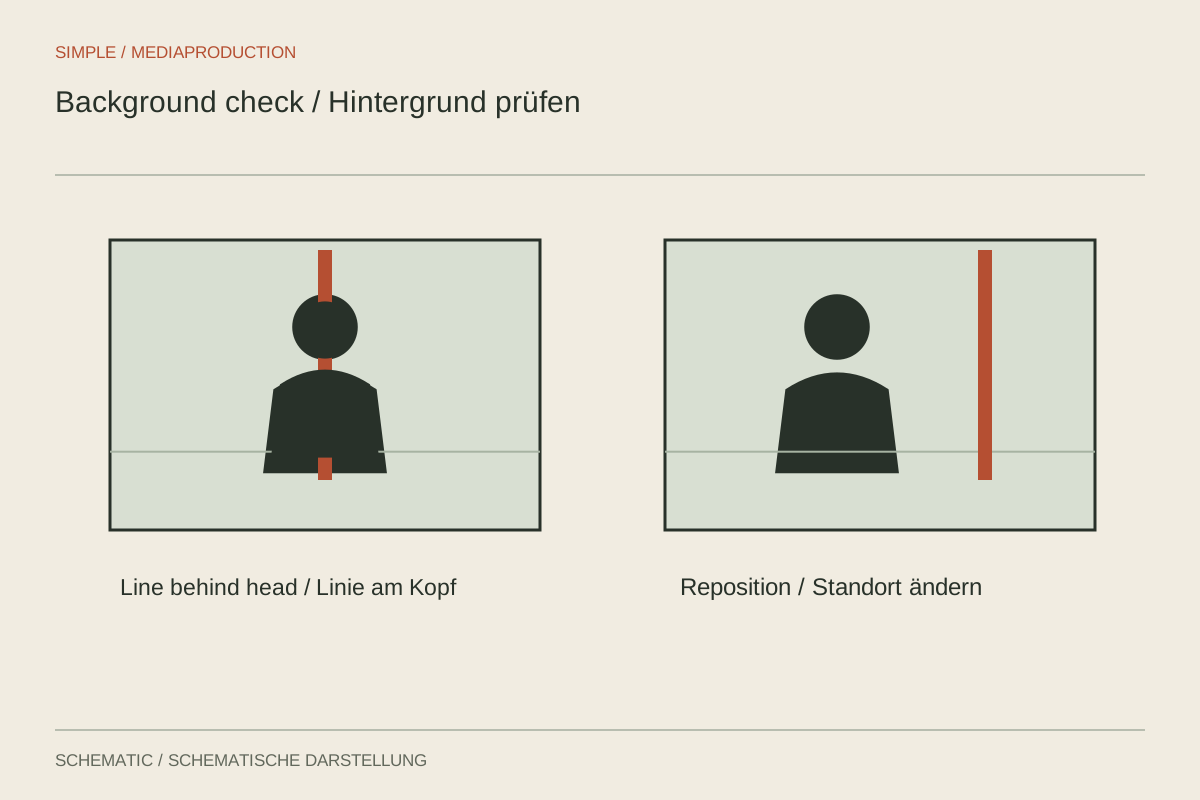
A tidy shelf can still compete with a face on camera. A bright edge behind the head, a reflection or an object apparently growing from a shoulder draws attention away from the explanation. Inspect the background through the lens from the final position. Something unobtrusive in the room may form an unwanted relationship within a flat, two-dimensional composition.
Scan the edges and the area around the head
First look for lines or objects touching the head and shoulders. A small sideways camera movement or another seating position may be enough. Do not immediately rearrange the whole room. A minor adjustment can solve the issue without creating new lighting and sound conditions. Afterwards, recheck the frame edges because other objects may have entered the composition.
Watch bright areas and strong colour contrasts. A small luminous screen can attract more attention than a large dark shelf. If it contributes nothing, it may be switched off or turned away. Background blur does not necessarily remove such brightness cues. Defocus is therefore not a substitute for choosing deliberately what remains visible behind the speaker.
Check the background during movement
Let the person make their usual gestures and head movements. A distracting object may appear only when they lean aside. A second camera also sees a different background despite sharing the same room. Inspect both views independently and then compare them in alternation, as they will appear in the edit.
Reflective surfaces deserve particular attention. Windows, glossy devices and glasses may reveal the camera, lights or crew. Change angle or position when that is unintended. Remove confidential documents and personal details that serve no purpose in the film. A blurred name may become readable in a higher-resolution version or a different crop, so do not rely solely on apparent softness.
Preserve useful context
A background can explain where someone works or what object is being discussed. Do not automatically erase every trace of the location. Choose a few intelligible elements supporting the message. In a workshop, a characteristic tool may help, while unrelated packaging merely introduces additional shapes without explaining anything about the activity.
Record a short sample and watch it without sound. Ask where attention goes first. If the main subject does not remain clear, change one identifiable cause and compare again. The background then contributes to the explanation instead of becoming a surface that needs laborious concealment during editing after the location has been left behind.