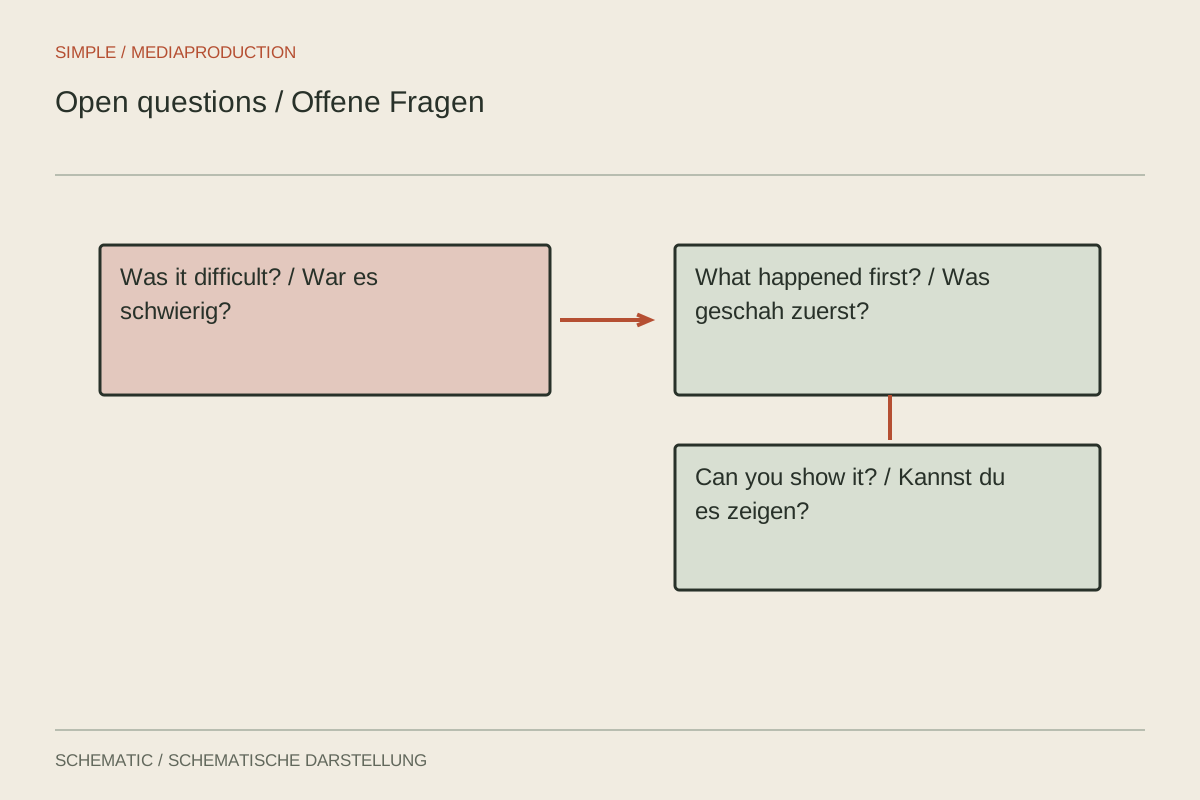
“Was the project successful?” can be answered with a single word. “How did you notice the new process was working?” invites an observation. For an explanatory interview, this difference matters more than an elaborate question list. Preparation provides a starting point; listening during the conversation determines which next question is useful.
Ask one thing at a time
A three-part question often receives an answer only to its final part. Separate timing, difficulty and outcome. Start with “What happened during the first attempt?” and then follow up on a particular obstacle mentioned in the answer. This lets the contributor find their own sequence rather than confirm a summary you have already supplied.
Avoid evaluative adjectives in the question. “How helpful was our rapid support?” already contains the desired judgement. “What happened after you contacted us?” is more neutral. A specific answer may be positive, critical or mixed. If the film aims to explain credibly, the question needs to leave those possibilities open instead of steering towards praise.
Make abstract answers concrete
“The collaboration was good” gives the audience little to picture. Ask about a situation: “Can you describe a moment when that became apparent?” Then explore the action and its consequence. An example is usually easier to edit and understand than a list of general qualities. Do not manufacture an experience if the contributor cannot recall one.
Closed questions are not inherently wrong. They can confirm a number, date or decision. When an answer remains ambiguous, “Was that before or after the change?” may supply exactly the missing clarification. Afterwards, reopen space for explanation. The question form should follow the information you need, rather than a rigid rule that every question must be open.
Consider the edit without losing the conversation
If your questions will not be heard in the finished film, explain beforehand that answers need a clear reference. “Since April” might become “We have used the new process since April.” Request a repeat only when the context is genuinely missing. Requiring every answer to become a complete promotional sentence quickly makes the conversation stiff and may remove useful nuance.
Leave a brief quiet moment after an answer. An important addition may follow, and the pause gives the edit a clean boundary. Note unresolved points without withdrawing your attention from the speaker. At the end, “What important question have I not asked?” can reveal a gap. Any resulting answer still needs to fit the film's subject and be checked for factual accuracy.