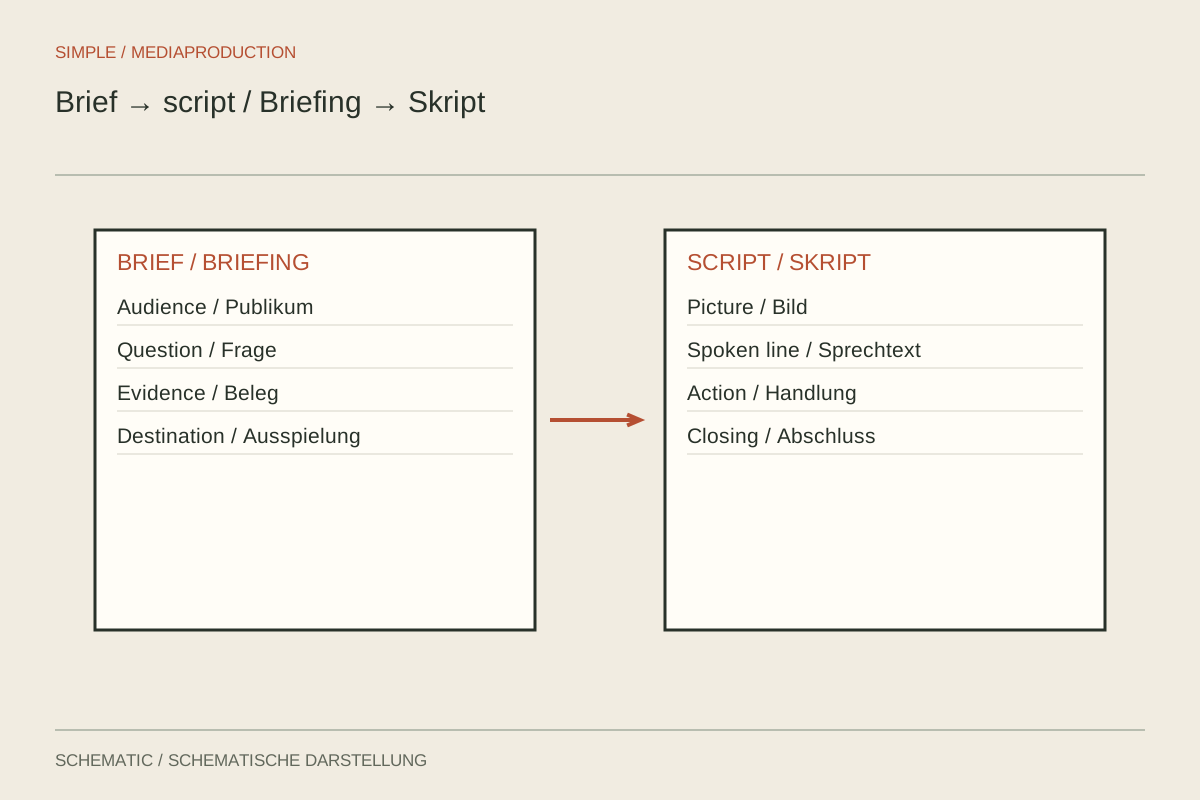
A script describes what the film should show and say. A brief first establishes why the film exists and the conditions it needs to meet. Without that layer, people often debate wording when the real uncertainty concerns the audience or intended use. For a small project, a clear page that everyone involved can read is usually enough to make these decisions visible.
Separate decisions from preferences
Start with the occasion, audience and intended outcome. For example, a library wants to explain how new members collect a library card. The film should explain the preparation, rather than introduce every service in the building. Add where it will appear, whether sound can be assumed and which languages are needed. “Modern and dynamic” is a stylistic preference; it does not yet define a task that can be checked.
Keep confirmed information separate from open questions. If the collection point and required documents are confirmed, they can enter the script. If the process is changing, assign someone to resolve that issue by a stated date. A question mark in the brief is preferable to a guessed fact in the finished film. Record who can check the factual details as well.
Make the deliverables specific
“One video for every channel” does not define the work. Record the number of versions, approximate durations, aspect ratios, captions and required files. A horizontal main film and a vertical extract may need different compositions and text. If an editable project must be delivered, plan for that from the outset. Music rights and third-party footage do not automatically transfer with a project folder.
Agree how feedback will work: who collects comments, who resolves contradictions, and when changes must arrive. Letting everyone contribute can be useful, but somebody must turn those opinions into an actionable instruction. Separate the factual review from later preferences about style, so an incorrect explanation is not discovered only during final approval after it has already been filmed.
Expose a contradiction early
Test the brief with a simple counterexample. If a thirty-second film must explain twelve operating steps completely, the scope and duration probably conflict. Choose between an overview pointing to further instructions and a longer tutorial. Write that decision into the brief instead of making it silently during the edit. This also gives reviewers a shared basis for judging what belongs.
Dates and version numbers help even on small projects. If the purpose changes, revise the relevant passage and check the consequences for filming, narration and delivery. A brief should permit change while making its effects visible. It becomes useful when the later script agrees with the decisions it records, rather than becoming a document nobody checks again.