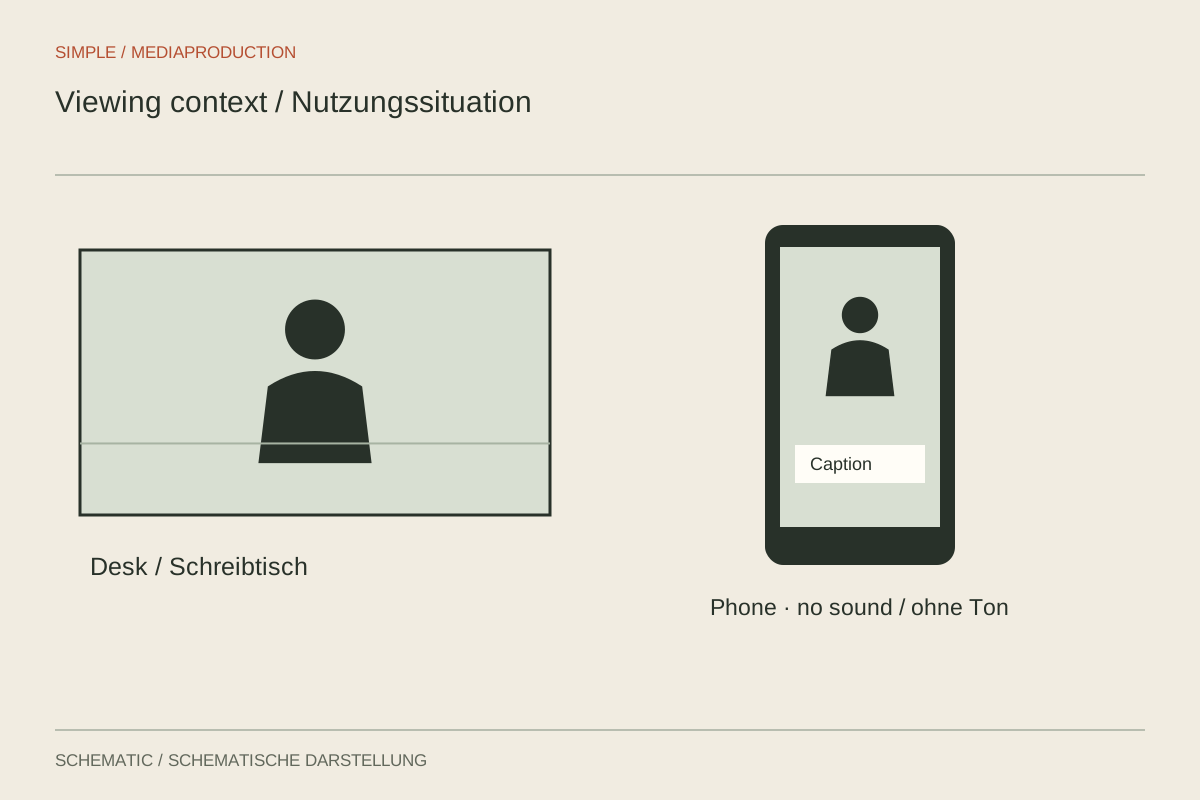
A tutorial can be technically correct and still miss its audience. Someone who operates a machine every day needs different information from someone seeing it for the first time. Viewing conditions change the film too: at a workstation, the viewer may be able to try a step immediately, whereas on a journey the equipment is unavailable. Describe a specific use situation before writing, rather than naming only a broad age group.
Describe a person with a task
“People aged 20 to 60” says little about the content. “New employees need to set up the label printer before their first shift” supplies both a starting point and a task. Note what these viewers already know and which terms need explaining. They may know the product number but not the name of a latch. Show that particular latch before relying on its name later.
Avoid inventing a detailed biography for an imaginary viewer. Planning only needs information that changes the film: language comprehension, available equipment, expected knowledge, available time and the reason for opening it. Mark unknowns as assumptions and ask people from the intended group. A short conversation is more useful than an elaborate audience profile with no evidence behind it.
Consider the actual screen
A detail visible on the editing monitor may disappear on a small phone. Check labels and hand movements at the size in which the video is likely to be watched. A wide view of the workbench establishes the space but may not explain which small lever to move. That may require an additional close shot.
If the piece must work without sound, its essential information needs a visible form. Captions do not replace a missing view of a hand movement. Conversely, an important caution should not flash up briefly as tiny text. Allow complex instructions sufficient time and wording that makes sense without the preceding soundtrack. Consider where interface controls may cover the lower part of the image, too.
Try two viewing routes
Show an early version with sound on a larger screen, then silently on a phone. Ask the test viewer to describe the next two actions in each case. This checks comprehension more precisely than asking for an overall impression. Record where they rewind or have to guess, and compare those moments with your original assumptions.
When two groups need fundamentally different explanations, separate the openings or make two versions. An experienced user may need only the changed feature, while a beginner also needs the basic controls. Both can share recorded material, but the sequence and depth of explanation should fit the particular audience.