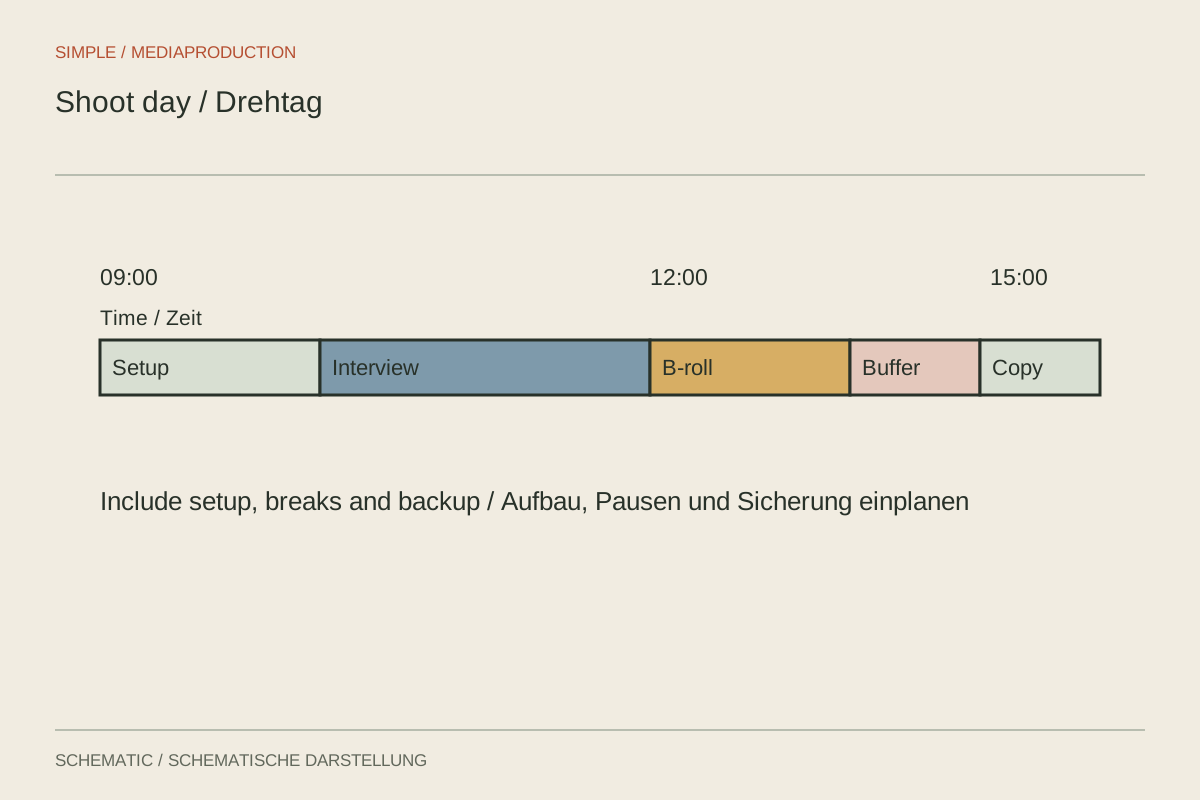
A two-minute film does not require only two minutes of filming. Even one interview can involve arrival, setup, briefing, a sound check, several answers and supporting pictures. Plan in work blocks rather than finished screen minutes. A credible schedule shows which conditions must come together before a block can begin. It also reveals which coverage should be protected first when the day falls behind.
Enter fixed appointments first
Start with times that are difficult to move: a contributor's availability, building access or a recurring activity at the business. Place the necessary preparation before them. If the interviewee arrives at ten, that should not also be the moment the camera comes out of its case. Allow for a working setup and a short introduction before recording begins.
Distinguish presence from readiness. Someone may need time to change into work clothing, prepare a product or finish an earlier task. Ask about these routines instead of converting a calendar appointment directly into recording time. Give each contributor their own meeting point and expected duration, without assuming they can interpret the full technical schedule or know where the crew is working.
Estimate setups rather than individual clips
Group shots sharing the same background, light position and similar audio settings. Changing a lens may be quick; changing the direction of the light can alter the entire setup. Record the preparation and essential results for each block. This explains why five related details can be quicker together than five separate appointments spread throughout the day.
A small morning session might begin with setting up and testing the interview position, continue with the conversation, then cover the actions mentioned in it. Give a break and a material check their own slots. Actual minute estimates should come from experience with the real setup. Do not borrow another production's sample timetable when the crew size, location or participants differ significantly.
Put contingency where uncertainty lives
A uniform allowance is less useful than extra time at identifiable bottlenecks. With unfamiliar equipment, uncertainty may lie in setup; at a public location, it may concern waiting and interruptions. Write the assumption beside the block. If the risk materialises, the team can respond to a known constraint rather than treating every delay as an unexplained failure.
Allow realistic breaks and refreshments. Fatigue affects concentration, speaking pace and technical checks. Backing up footage also needs an assigned person and uninterrupted time. A copy operation should not leave an active recording unattended. On a one-person shoot these activities must happen sequentially, even if a larger crew could perform them in parallel. The timetable needs to reflect the team actually available.
Responding when the day runs late
Compare progress against the essential picture tasks first. Remove optional variations before leaving the key process incomplete. A setup already in place may be finished with a simpler shot. Explicitly discuss any change affecting the message or agreed deliverables with the responsible person; do not silently exchange an important explanation for a visually attractive substitute.
Tell waiting contributors about revised times early. A quietly shifted appointment merely passes the problem to someone else. Finally, record which estimates proved wrong. Those observations improve the next schedule more effectively than a blanket rule to double every allowance, because they identify the actual work that took longer than expected.