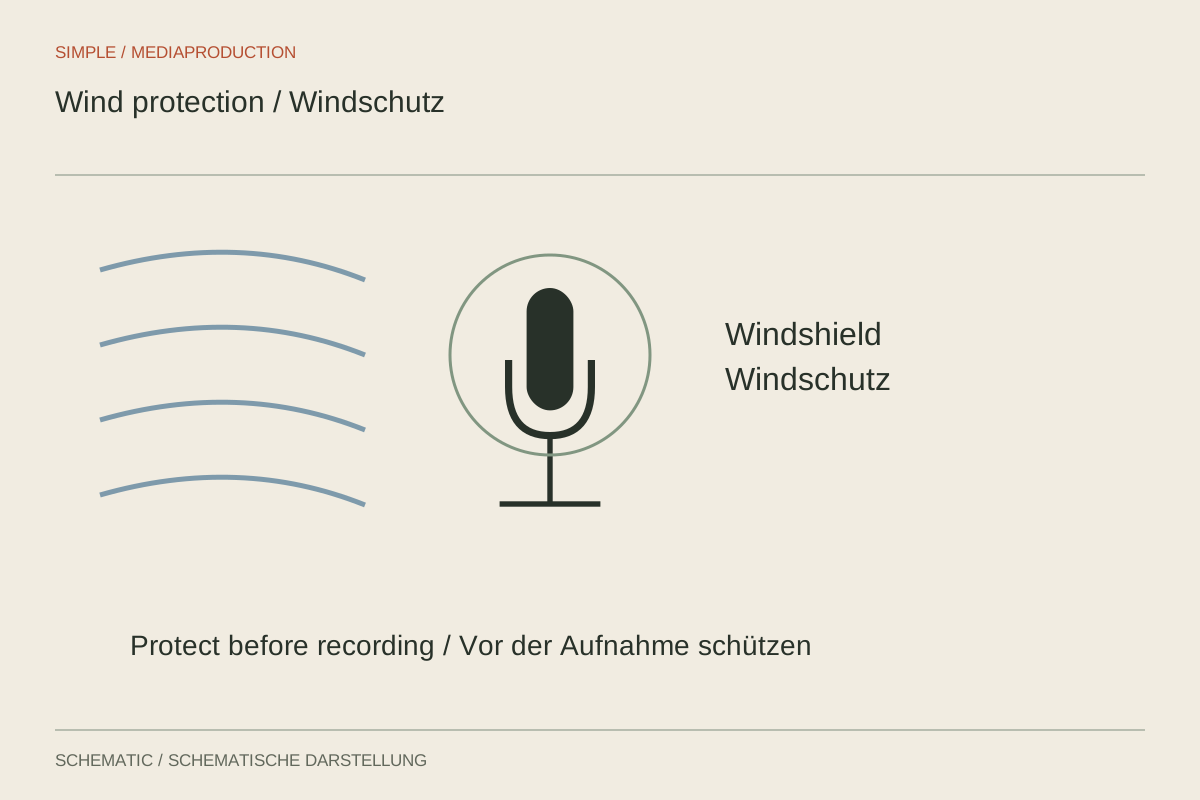
Wind noise often sounds like low thumps or irregular rumbling. It occurs when airflow disturbs the microphone's capture. A breeze that feels mild on the face may already be clearly audible. Judge sound through headphones rather than only by how windy the location feels. Moving the camera can also create airflow past the microphone.
Fit suitable protection completely
A foam cover can reduce light air movement. Stronger wind often needs a suitable furry cover or basket windshield. The correct design depends on the microphone. Accessories must cover the intended openings properly and must not sit loosely. Follow the manufacturer's fitting instructions.
Check whether fur or mounting parts rub against clothing, cables or the housing. Protection that creates mechanical noise merely exchanges one problem for another. Lavaliers offer particularly little space, so test actual head and body movement after fitting the cover.
Find a calmer angle
A building, hedge or another sheltered position may reduce airflow. Make sure it does not introduce stronger traffic or room noise. Turn the arrangement gradually and listen to a short test each time. The quietest orientation for speech is not always the most attractive background; both requirements need to work together.
Have the speaker talk normally and then remain silent for several seconds. This reveals whether wind is noticeable only in gaps or already obscures words. With intermittent gusts, test long enough to avoid judging one accidentally calm second.
Use filters as a supplement
A high-pass filter can reduce low-frequency disturbance, but an excessively high setting also changes the voice. It cannot prevent overload that has already occurred earlier in the signal chain. A distorted syllable may therefore remain unintelligible despite having less bass.
If conditions exceed the protection's capability, change the location or recording time. One clean repeat of an important sentence is usually more valuable than many damaged versions. Check the saved file before dismantling the setup. Rumble is easy to miss on a camera's small loudspeaker.