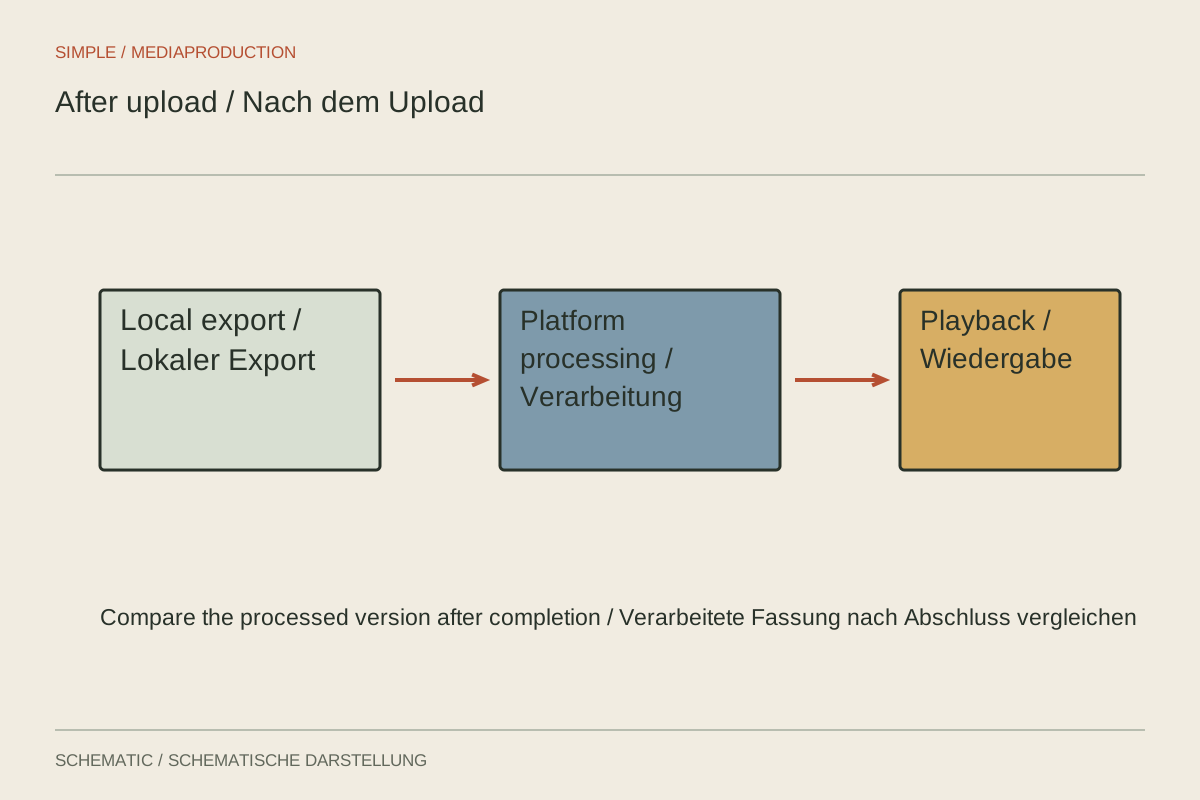
After upload, a video looks soft or blocky even though it appeared sharp in the editor. Before exporting everything again, separate three stages: the actual local file, the service's processing and the currently selected playback quality. Problems or delays at each stage can look similar.
Begin with the local file
Open the exact uploaded file outside the editor. Inspect the problematic passage at a sensible display size. If small lettering or fine texture is already damaged, the cause precedes uploading. A sharp preview of original media does not establish the quality of the compressed export.
Check resolution, frame rate and actual framing. A smaller output may have been created, or proxies may have been used unintentionally. Compare the same moment in the source and export. Change settings only once the difference can be located specifically.
Allow processing to finish
Many services create several playback versions after upload. Higher resolutions may become available later than an initial low-quality version. Check processing status and selectable quality levels. A soft image immediately after uploading therefore does not yet prove the export was unsuitable.
Automatic quality selection can also respond to network conditions and the device. Deliberately select an available high-quality level for comparison and see whether the picture changes. A slow connection may trigger a smaller playback version even though a better one already exists on the service.
Compare the demanding passage
Inspect the same moving detail locally and online. Foliage, water, noise and fine lettering demand more than static smooth areas. If only particular scenes break down, their content may be especially difficult for the additional encoding. Indiscriminately doubling every export setting is not a targeted diagnosis.
Also check whether colour or brightness, rather than sharpness, is the real issue. HDR and SDR handling, metadata or differences between players can have causes unrelated to bitrate. Describe the visible difference precisely before concealing it with sharpening or stronger contrast.
If another test is needed, use a brief representative passage and the service's current recommendations. Keep other variables constant and wait for processing again. Preserve the better local source. A downloaded platform version that has already been re-encoded should not become the starting point for the next quality improvement.