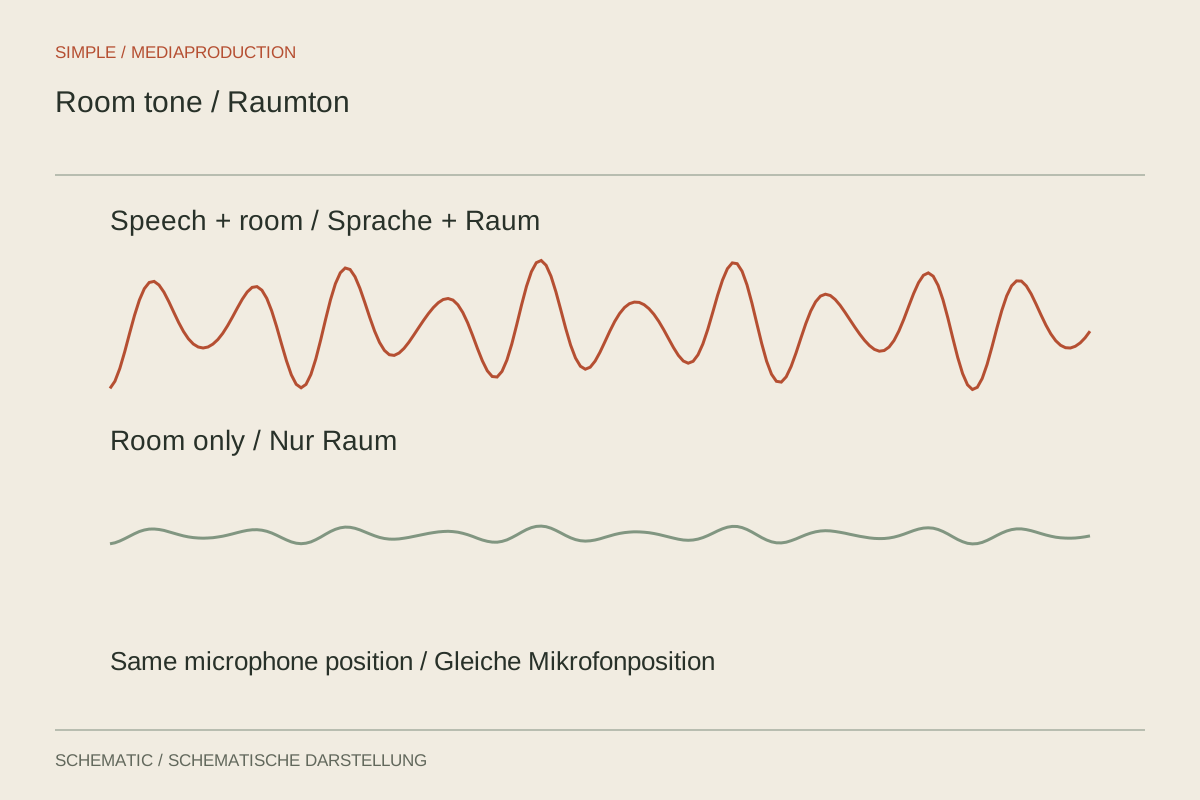
Removing a pause from an interview can leave absolute digital silence between two sentences. The room then seems to switch off briefly. Room tone is a recording of the environment without spoken words. It can fill such gaps and smooth transitions when microphone position, gain and room conditions match the dialogue. It is not automatically a noise profile and cannot replace missing words.
Record before dismantling
After a suitable passage, ask everyone present to remain quiet for a while. Keep microphones, chairs and people in approximately the same positions. An empty room sounds different from the same room containing several people. Do not suddenly switch off a fan that was audible throughout the interview just for the room-tone recording.
Capture a sufficiently long quiet passage, perhaps half a minute as a starting point. The useful duration depends on how the background behaves. Constant passing vehicles may require several attempts to obtain a reasonably steady section. One short breath between words rarely provides a versatile supply for numerous edits.
Use the actual recording path
Record through the same microphones and channels used for the conversation. A separate phone recording at the other end of the room has a different perspective. With two lavaliers, both tracks may be useful because clothing, position and self-noise differ. Label files so their relationship to the scene and setup remains clear.
Avoid handling noises, rustling notes and stand movements during capture. The temptation to start packing during the quiet interval destroys the material being recorded. Listen briefly afterwards. A cough or closing door need not invalidate the entire file, but must be excluded when selecting usable sections.
Build small transitions in editing
Place a matching section under the gap and adjust its level to the background around the neighbouring speech. Short crossfades can avoid abrupt edges. Listen to the transition within the complete sentence. A cut that sounds perfect in isolation can still feel unnatural in the rhythm of speech.
Repeating a short section frequently may reveal recognisable noises as a loop. Use longer suitable passages or different portions of the same steady recording. Avoid conspicuously repeated footsteps, bird calls or keyboard taps. Such events are not neutral filler and may unintentionally suggest new information.
Record again after changes
Opening a window, changing air-conditioning settings or moving to another corner creates a different acoustic state. Capture new room tone for it. Document which part of the conversation it belongs to. Laying one continuous background across incompatible setups can be as noticeable as complete silence.
Room tone cannot reliably rescue a damaged sentence. If a loud noise overlaps an important word, a repeat or another existing statement is needed. Use the material for continuity and natural pauses, not to imply a different factual situation. Keep the unprocessed recordings alongside the edited version.
Use an existing pause as a reference
Find an undisturbed pause in the dialogue close to the edit. Compare its background with the proposed room tone at the same listening level. If the replacement sounds much wider, brighter or louder, it may come from another position or have different processing. Do not start by adjusting only level; check the source. For one gap, a short matching section may work better than a long but acoustically unrelated recording.