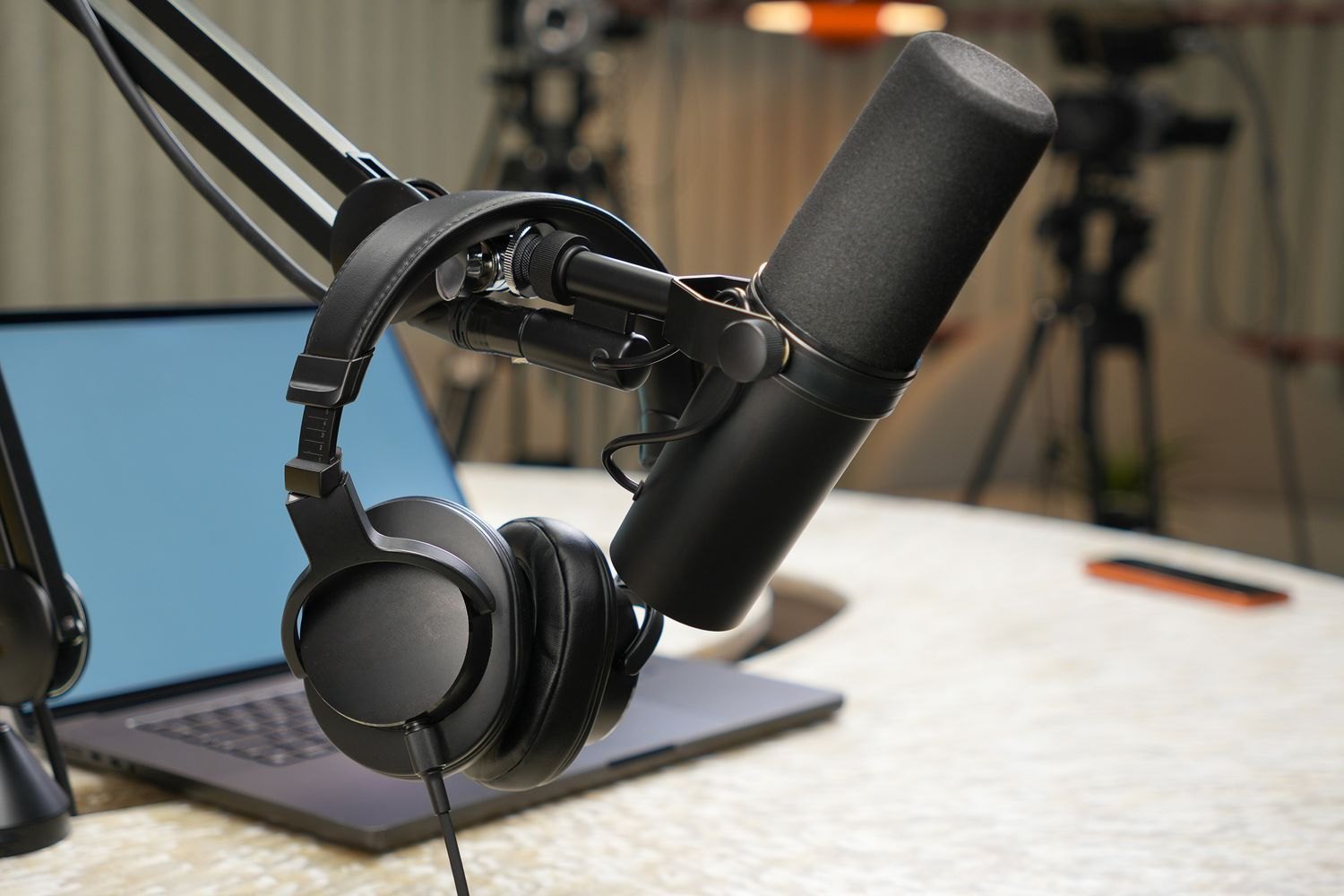
A podcast voice may sound full at the beginning of a sentence and suddenly thin at the end. Often the speaker has leaned back or turned towards a screen. Distance changes level and, with many directional microphones, bass response too. A stable position is therefore part of shaping the sound before any equaliser is applied.
Find a comfortable starting posture
Arrange chair, screen and notes so the speaker can talk without twisting. Bring the microphone to that position. Check whether its intended pickup is from the end or side. An incorrectly oriented microphone can sound unexpectedly quiet or dull even at short range.
Begin at a distance appropriate for the model and compare brief recordings slightly closer and farther away. Match listening volume during comparison so that louder is not automatically judged better. Listen for clear consonants, bass weight, breath impacts and room sound. The useful distance suits both the voice and the speaker's actual movement.
Make distance visible without making it rigid
A pop filter can provide a spatial reference alongside its main purpose. It should not make someone speak unnaturally against an imagined boundary. If necessary, mark the chair position on the floor and keep the microphone arm outside normal gestures.
Place notes near the normal eyeline. Looking down and sideways for every prompt repeatedly changes the sound. In a two-person conversation, microphones can sit slightly to the side provided each voice remains within its intended pickup area. Test the arrangement using real changes of gaze.
Notice changes early
Monitor a rehearsal on headphones and request a longer answer. Brief tests often fail to reveal a later habit of leaning back. Agree a discreet signal if the distance becomes excessive. Repeated spoken corrections needlessly interrupt the conversation.
A compressor can limit level differences later, but cannot fully compensate for a changing proportion of room sound. If leaning back makes the voice more reverberant, recording geometry is the underlying problem. A comfortably arranged workspace usually prevents this variation more reliably than increasingly strong processing of the finished track.
Compare a small movement deliberately
Read the same paragraph first in the starting posture and then with a typical backward lean. Match playback volume and listen for whether the second version is merely quieter or also thinner and more reverberant. Level adjustment alone is broadly appropriate only in the first case. When tone changes, rearrange screen and arm so the comfortable posture remains close to the microphone. A floor mark does not prevent the torso leaning back. The arrangement should make the desired behaviour easy rather than demanding repeated reminders throughout every session. Check the result with a longer answer rather than only another brief test phrase.