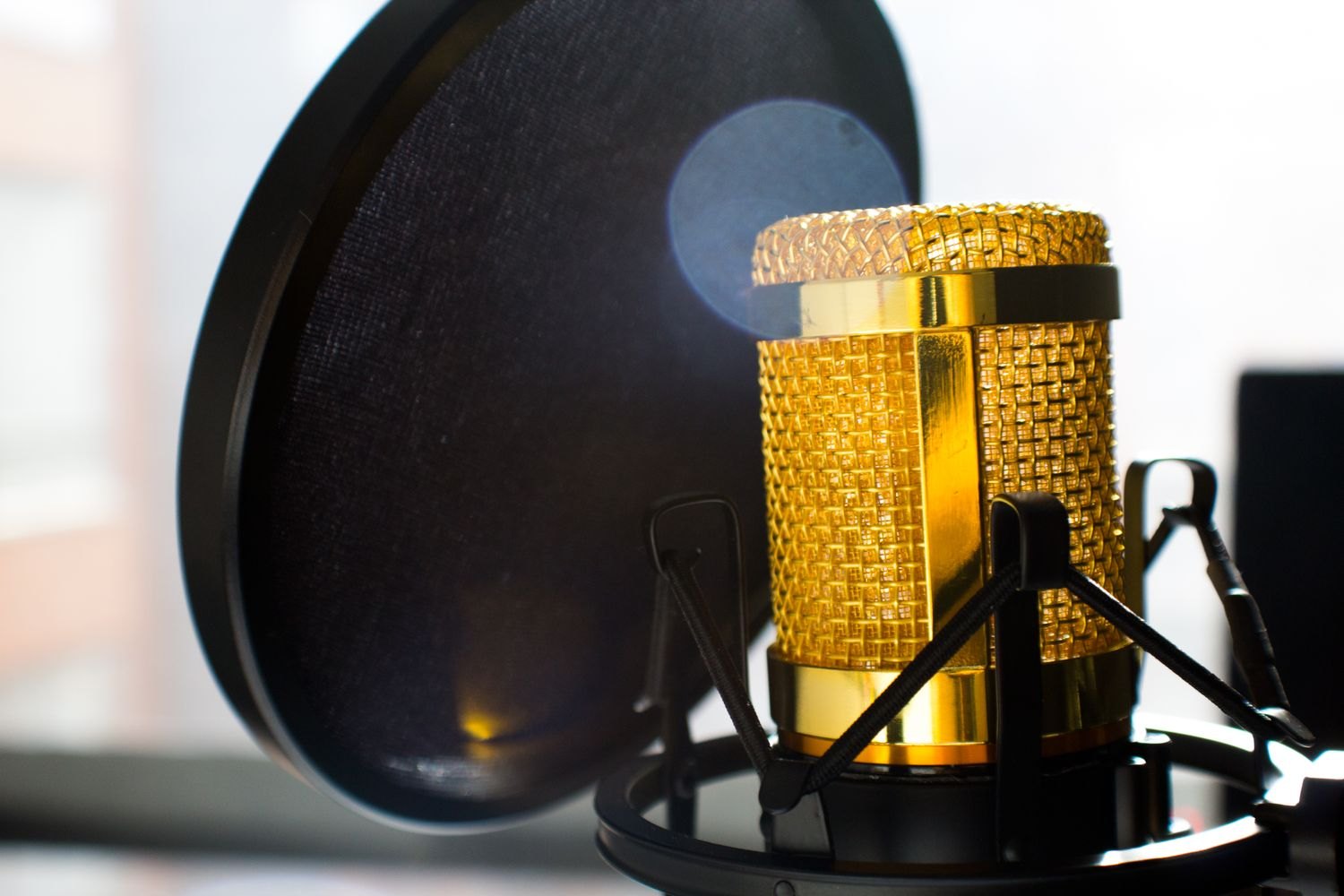
A low puff at the beginning of a word is not the same as an overly bass-heavy voice. During a plosive, a short burst of air reaches the microphone and can strongly disturb the recording. Reducing all low frequencies afterwards also removes body from the rest of the voice. A targeted solution therefore starts with airflow and microphone position.
Speak past the air path
Place the microphone slightly to one side or above the direct breath path while keeping its pickup area aimed towards the mouth. The speaker then avoids blowing straight into the capsule. A small adjustment can help; a large angle may reduce high frequencies and clarity. Compare the same sentence in both positions.
Use a test sentence containing several P and B sounds alongside ordinary consonants and vowels. This reveals whether the improvement affects only the bursts or dulls the entire voice. Avoid asking for artificially cautious pronunciation that will not be maintained in the conversation.
Give the pop filter space
A suitable pop filter disperses the burst before it reaches the capsule. Follow the manufacturer's recommended arrangement. A filter pressed directly against the microphone may be less effective and can transmit mechanical noise. Check that the speaker does not accidentally touch it while talking.
A foam cover and a separate mesh filter are not equally effective in every situation. Choose a solution suited to the microphone and setup. Several arbitrary layers can unnecessarily change the tone. What matters is an audible improvement in the recorded test.
Repair isolated faults selectively
If one plosive disrupts an otherwise good recording, local treatment may be more appropriate than strong filtering across the entire track. Carefully reduce the affected region or evaluate a specialised repair tool. Listen to the full sentence in context afterwards.
An overloaded input may already have damaged the original syllable. Recording again is often the cleanest solution in that case. Before a long voice session, test several emphatic word beginnings and repeat after changing chair height or microphone-arm position. A few centimetres of difference in the air path can matter.
Separate breathing from plosives
A steady breath between sentences and a short air burst on a P serve different roles. Do not remove every breath merely to make the track seem clean. The speaker may then appear to talk unnaturally without air. Treat the troublesome event selectively while retaining ordinary breathing at a sensible level. After changing microphone position, check that quiet word beginnings remain clear. A large sideways shift that eliminates every pop may also lose useful high-frequency detail. The appropriate setup balances breath protection, natural tone and a comfortable repeatable position, and should be evaluated using complete speech rather than isolated test consonants.