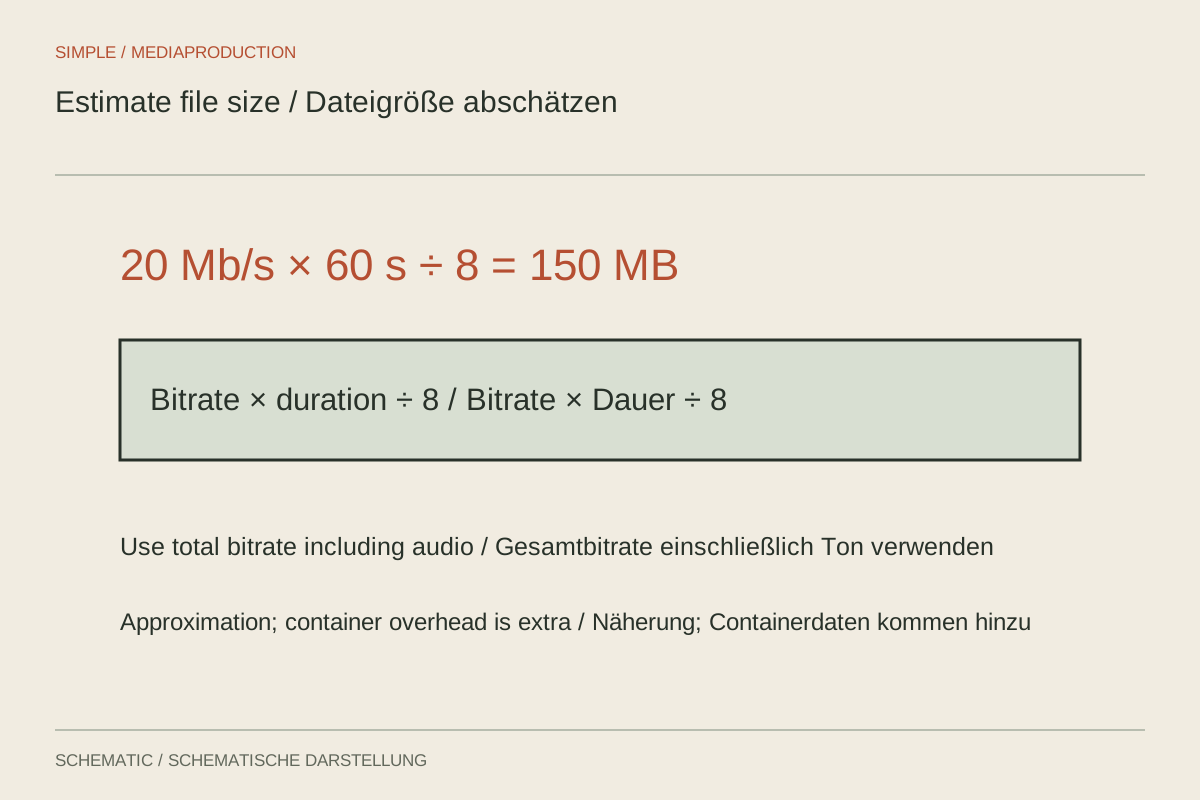
A video's size can be estimated from its duration and bitrate. The calculation helps with upload limits, storage planning and review-copy decisions. It does not determine suitable quality, however, and variable encoding does not necessarily produce the exact predicted size.
Keep the units distinct
Bitrates are commonly given in megabits per second, while file sizes use megabytes or gigabytes. Eight bits make one byte. For a decimal approximation, multiply the average combined bitrate in Mbit/s by duration in seconds, then divide by eight. The result is in MB.
A two-minute video at 8 Mbit/s therefore requires approximately 120 MB for its video stream. Audio at another 0.2 Mbit/s adds about 3 MB. Container information adds a little further overhead. These figures demonstrate arithmetic rather than recommend a suitable quality setting.
Work backwards from a limit
If a file must stay below 100 MB and lasts 120 seconds, the theoretical average combined rate is about 6.67 Mbit/s. Audio and overhead need to fit within that budget. Leave some margin rather than exporting exactly at the calculated boundary.
A tool may show MiB while an upload limit uses MB. Those units are not identical. When the limit is tight, establish which measurement is being used. Inspect the completed file with a suitable properties tool rather than assuming compliance from a rounded display.
Understand deviations
With variable bitrate, the actual average depends on content and the encoder. A configured maximum is not the same as an average. A quiet presentation can therefore differ from a moving montage of equal duration. Quality-based settings without a fixed bitrate target often require a test for an initial estimate.
A short trial export can help if it represents the material reasonably. A purely static section may underestimate a film containing frequent rapid movement. After the complete export, check both size and image quality. Meeting the size limit does not make an unreadable video useful.
Preserve a higher-quality source independently of a tightly constrained delivery copy. If another limit applies later, export again from that source. Repeatedly compressing the already small file may save more bytes, but weakens the starting point for every subsequent attempt.