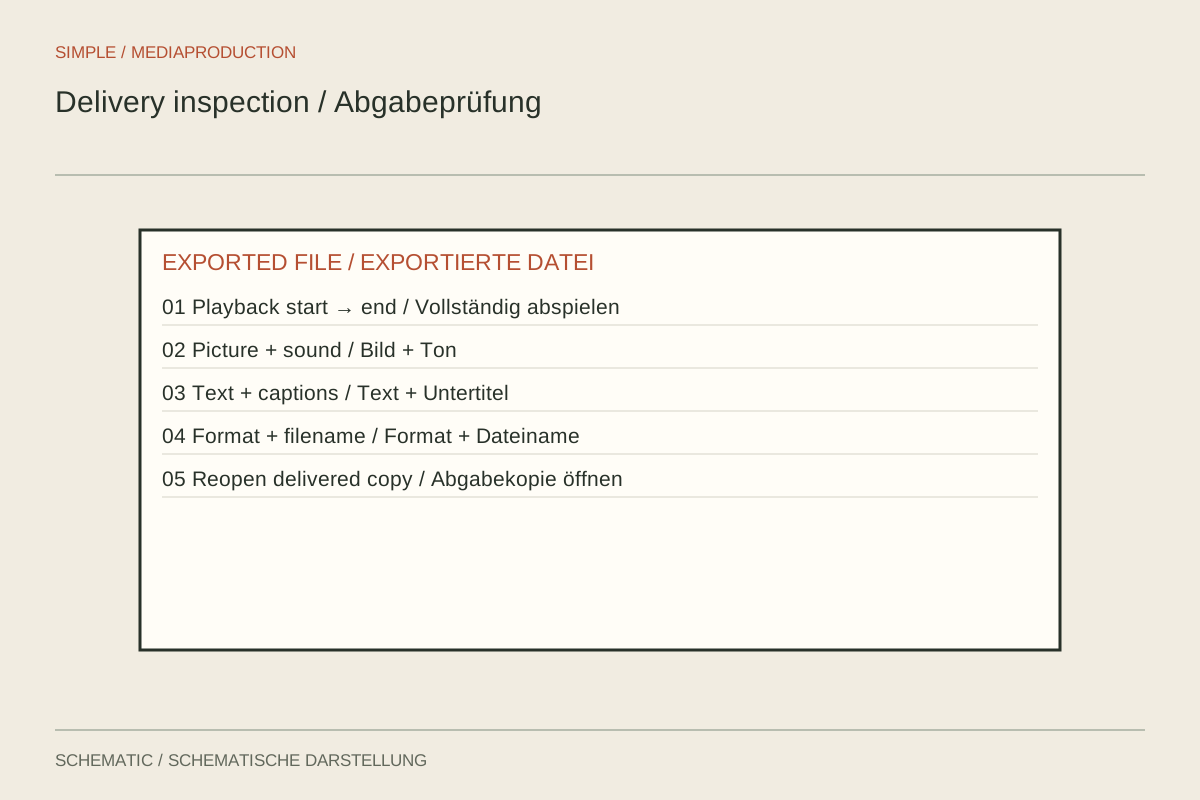
A technical delivery check begins with a clear question: which file is being delivered for which use? Without that relationship, a general checklist remains vague. A web video, presentation file and editable project need different verification. Focus on the agreed properties and the components actually supplied.
Connect requirements with the file
Place the required resolution, frame rate, container and codec combination, sound and text requirements beside the export. Inspect actual file properties. A preset name or memory of the export dialogue is insufficient. Where a requirement is absent, record the chosen assumption rather than presenting it as confirmed. Check version, language and duration. Does the file start and finish correctly? Have review time references, watermarks or placeholders been removed where they are not part of delivery? Watch for unintended extra seconds at the end, with lingering audio or a single frame.
Inspect picture and sound in practice
Play the file completely and note problems. Check black frames, missing media, unexpected jumps, cropped text and incorrect scaling. Inspect moving edges and fine lettering where relevant. File analysis cannot fully replace looking for those visible faults.
Listen to all sound and check the intended channels. Measure required loudness and peak values using suitable tools. A meter result does not establish the intelligibility of every name, and intelligible speech does not automatically confirm compliance with a technical specification. The checks serve different purposes.
Include supporting components
Where caption files are supplied, open them with the corresponding video. Check language, characters, timing and presentation in the intended system. Every actual output needs inspection when delivering several formats. A correct wide version cannot rule out a cropped title in vertical.
For an editable project, verification includes media links and dependencies. For a playback copy, the agreed destination system matters instead. Avoid adding irrelevant checks merely to create a long list, while also avoiding silently omitting required ones.
Create a traceable conclusion
Record filename, version, test date and the checks actually performed. State unresolved limitations precisely. “Played on this computer” is more accurate than “works everywhere” when no other devices were tested. Identify sampling as sampling.
If another export is made after review, put the new file through the appropriate checks again. Compare size or a checksum after transfer where useful so the recipient receives identical data. Completion means a known, checked file with a clear identity, not merely a render progress bar reaching its end.