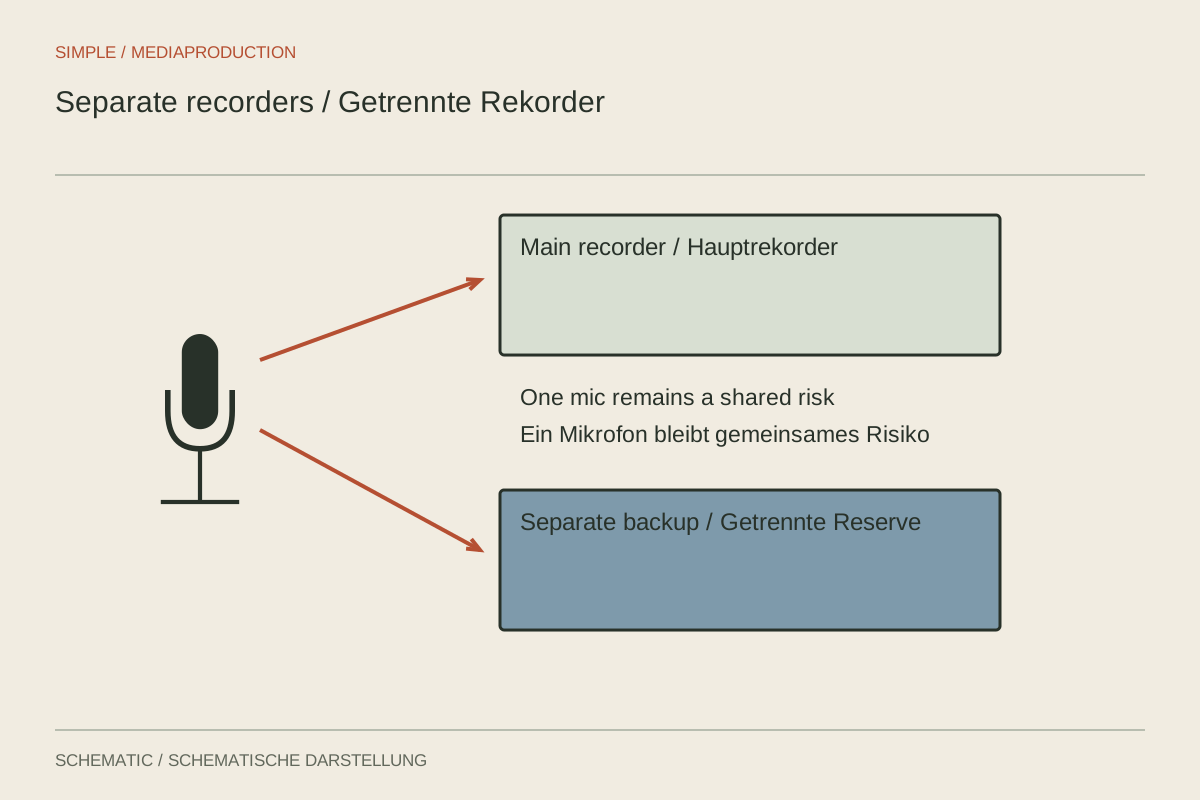
Two audio files do not automatically provide two independent backups. If both originate from the same faulty microphone, both contain its fault. If both live on one card, the second file does not protect against that card failing. Plan reserve sound around specific risks: wireless interruption, overload, a forgotten start or equipment failure.
Find the shared weak point
A safety channel recorded at lower level can protect against excessive gain at a particular stage. It does not necessarily protect an already overloaded capsule. Internal transmitter recording can bypass the wireless link, but still uses the same connected microphone. Both are useful while solving different problems.
Draw the main chain and mark where the fallback branches away. For an important interview, a lavalier could supply the main recording while a nearby directional microphone feeds a separate recorder. The backup will sound different but can cover a failure in the first chain. A distant camera microphone is a usable reserve only if its speech quality has been tested beforehand.
Verify start and runtime
A backup nobody started provides no protection. Establish a fixed check of both recording indicators. Inspect batteries, free storage and expected runtime separately. Two devices sharing one unreliable power supply remain jointly vulnerable to its failure.
If the backup recorder is worn somewhere inaccessible, test how recording and button locking are confirmed beforehand. Avoid unnecessary interventions during the conversation. Document file relationships and capture a shared synchronisation point so the reserve can be used without guesswork later.
Listen to the reserve too
Listen to a sample from every actually saved file. Checking only the main signal is insufficient. Include speech, movement and the loudest plausible moment. A backup may sound less polished, but should fulfil its intended role.
After filming, copy and label both paths separately. Retain originals until verification is complete. If the reserve is needed in editing, check synchronisation across the relevant section as well as tone. A useful backup is a prepared working option, not a guarantee against every conceivable fault.