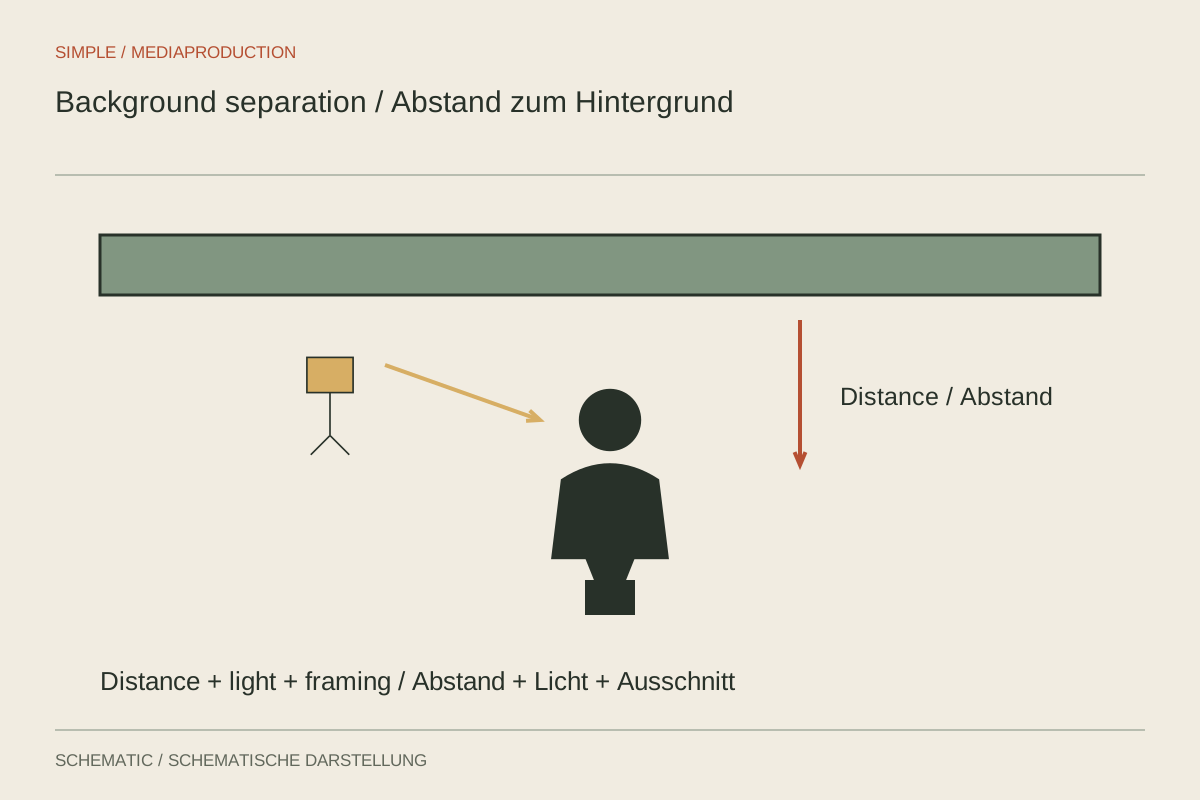
A dark shirt against a dark bookcase can merge into its surroundings on camera. Adding more light to the face will not necessarily solve this. Look at the whole outline: hair, shoulders and arms need readable boundaries where they matter. The useful adjustment depends on both the background and the intended image.
Change the seating position first
Move the chair away from the wall as far as the room and framing allow. This makes it easier to light the speaker and background separately. A shadow behind the head may also become less prominent. Reposition the camera if necessary so the extra distance does not accidentally produce a completely different shot size.
Try a sideways move too. Placing a dark shoulder against a lighter door panel may provide enough separation. It requires no extra fixture and remains stable through small head movements. Do not remove every background detail, however: a relevant working environment can explain where the conversation is taking place.
Distribute brightness and colour deliberately
A bright background does not need to be bright everywhere. One illuminated area behind a dark shoulder may be sufficient. Conversely, a pale blouse can remain readable against a quieter dark area. Judge separation in a small preview, because subtle differences visible on a large monitor are easier to lose in a mobile view.
Colour can help, but should not carry the entire distinction. A red shirt and an equally bright green background differ in hue, yet may be less clearly separated for some viewers. Briefly inspect a desaturated preview. It shows whether brightness also establishes a useful boundary around the person.
Add a restrained edge light
A fixture placed behind and to one side of the speaker can brighten hair or a shoulder. Aim it so it does not shine directly into the lens or produce unwanted flare. Excessive output can clip pale hair or fabric. A narrow burnt-out outline often attracts more attention than the original lack of separation.
Ask the speaker to lean forward and turn their head. If the bright edge travels across the cheek or face, adjust the angle. Keep stand feet and cables clear of movement routes. A successful arrangement stays readable throughout a conversation rather than requiring an exactly frozen pose.
Depth of field does not replace separation
A blurred background can quieten detail without guaranteeing a readable outline. A dark shoulder against a blurred dark surface remains dark against dark. Check brightness and arrangement before opening the aperture farther. Extremely shallow depth of field can complicate an interview when the speaker moves. For a demonstration involving hands, sufficient focus depth often matters more than maximum background blur. Compare a short movement at the actual planned aperture and judge whether face, hands and object fulfil their roles. Background treatment should support that information rather than compete with it or make the important action difficult to keep sharp.