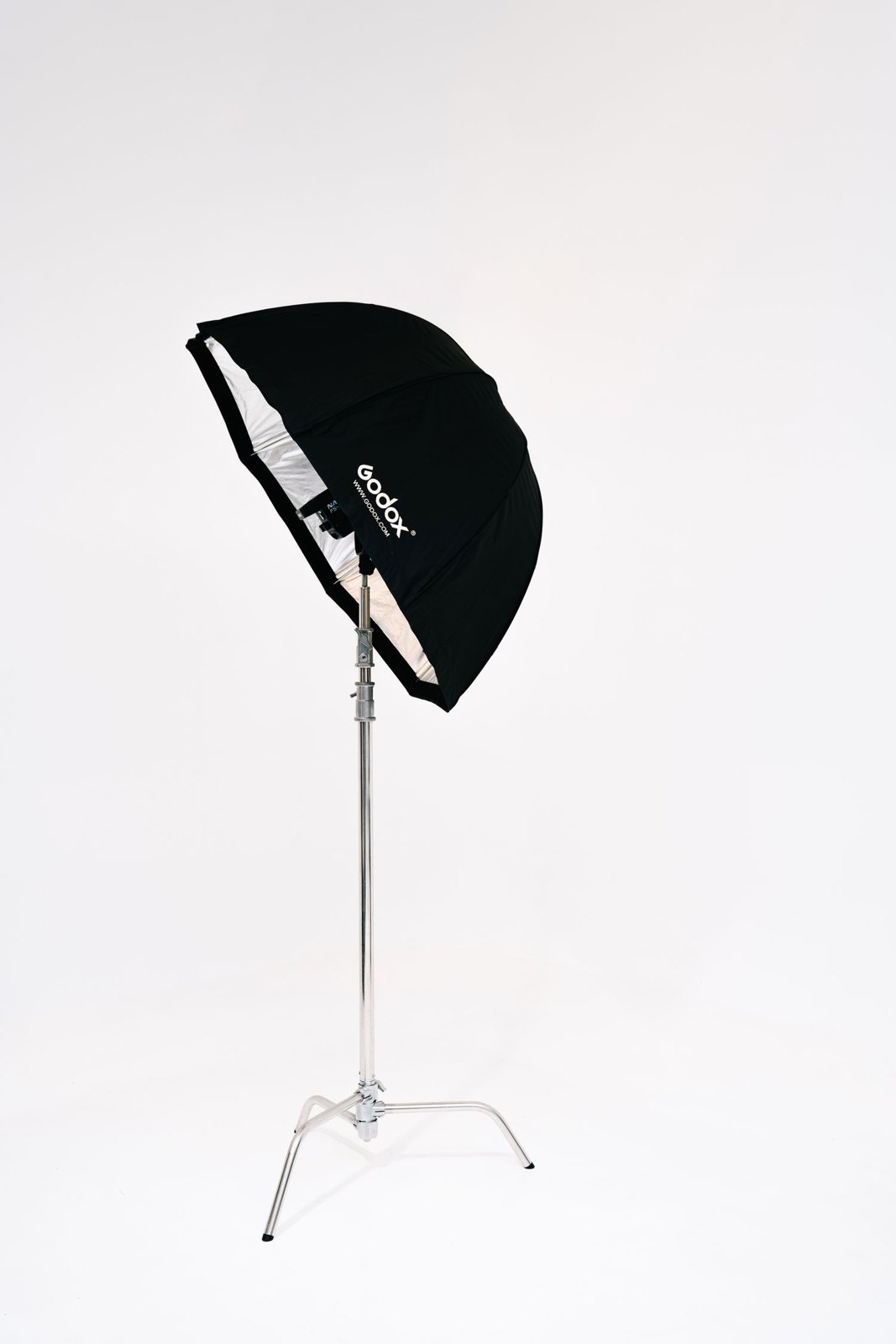
A single lamp does not need to illuminate the entire room evenly. Its first task may be to make the face clear and appropriate to the scene. The background can differ as long as important context remains visible. Start with the person, then examine how existing walls and surfaces affect the shadow side rather than immediately adding more equipment.
Change position before power
Begin with the light somewhat to the side and above eye level, without shining uncomfortably into the person's face. Move it in small steps while watching the nose shadow, eyes and glasses. A slight positional change can achieve more than a large brightness adjustment. Check ordinary head movement rather than only a rigid pose held for the setup.
The apparent size of the illuminated surface relative to the face strongly affects shadow edges. A suitable larger diffuser or lit bounce surface can create a broader source. Use only materials and clearances appropriate to the lamp. With heat-producing fixtures especially, an improvised cover should not be treated as harmless decoration. Follow the manufacturer's safe-use instructions.
Understand the room's shadow-side contribution
A white wall may already return considerable light. The setup may then need no further fill. In a dark room, a bright surface opposite the lamp can help without introducing another active source. Judge its effect in the image and alter its distance or angle. More fill is not automatically preferable; it can remove the shape you intended to create.
If the background becomes too bright, first try directing the source more selectively towards the person or changing subject-to-background distance. A bright patch behind the head can distract more than a generally darker wall. Any flag or shading surface must remain secure and must not obstruct the person or the intended movement route.
Check a complete take
Record a short spoken section with gestures. Inspect reflections, changes as the person moves and any fan noise from the fixture. One lamp can still matter acoustically, particularly with a nearby microphone. Check flicker at the chosen recording settings too, since a visually pleasing live setup may not produce a stable recorded image.
Document position, height, distance and output setting. Those details help repeat the arrangement far more than a photograph of the lamp alone. A successful one-light setup comes from the relationship between source, person, room and camera; the equipment count describes only a small part of that relationship.