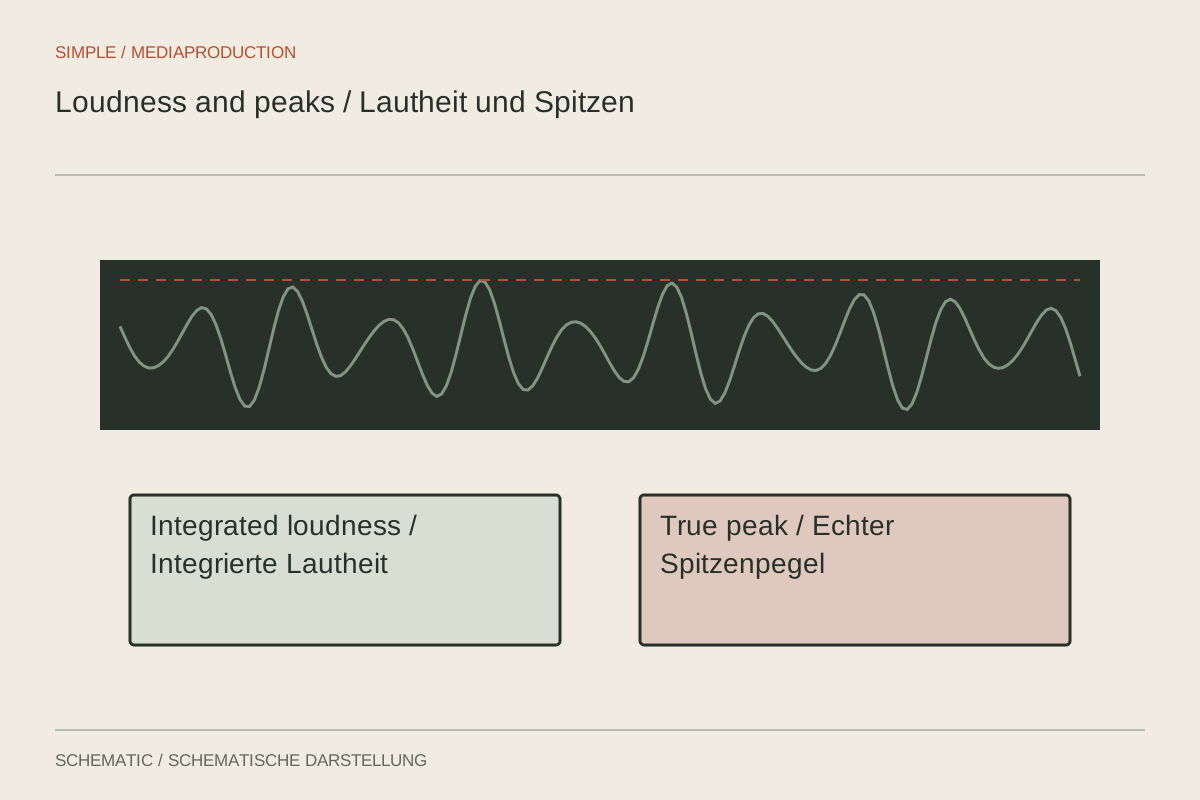
A film can remain below digital full scale and still sound uncomfortably loud or too quiet. A peak display does not describe the same thing as perceived loudness over time. Delivery therefore needs both an intelligible mix and measurements appropriate to the recipient's requirements.
Establish the requirement first
Obtain the actual specification before choosing a target. Broadcast material, a podcast and a particular online platform need not share identical requirements. Do not treat a frequently repeated internet figure as a universal rule. Channel arrangements and separate language versions may have additional requirements too.
EBU Recommendation R 128 uses a programme loudness of −23 LUFS and also considers loudness range and maximum true peak. That is a defined broadcast context, not a general instruction for every online publication. Where a commission requires it, check the current specification, permitted tolerances and any additional recipient requirements.
Understand the measurement
Integrated loudness represents measurement over the selected programme interval. Short-term displays help reveal variation within the film. True peak estimates peaks in the reconstructed signal and is not simply the highest stored sample value. Use an appropriate meter with the required configuration.
Measure the entire actual output, not only one loud sentence. A quiet opening, music passages and speaker changes all affect the context. Reset the measurement when starting again so an earlier test section is not accidentally included. Record which file or sequence the result describes.
A worked example with limits
Suppose a particular recipient requests −16 LUFS and a maximum of −1 dBTP. These are example requirements, not a general recommendation. Your file measures −20 LUFS and −6 dBTP. Raising gain by 4 dB would approximately produce −16 LUFS and −2 dBTP. Measure the actual exported result again afterwards.
If the starting peak is already −2 dBTP, that same increase would exceed the allowed peak mathematically. One gain control cannot then satisfy both objectives. Examine the mix and individual peaks. Targeted level changes or suitable dynamics processing may be needed; heavy overall limiting can audibly damage the result.
This calculation describes an unchanged gain offset. Once a limiter, compressor or other processing intervenes, simple addition no longer confirms the outcome because the signal's distribution changes. Measure again and listen to affected passages instead of copying the expected number into a delivery note.
Audibility needs its own check
Two files with similar integrated loudness can differ considerably within their running time. A very loud musical opening followed by quiet dialogue may be tiring even if the overall value passes. Compare speaker changes and particularly quiet words. Viewers should not need continual volume adjustments.
Inspect channel assignment too. A voice on one side only or an accidentally empty channel pair is not a loudness problem. Audition the intended channels separately and together where the workflow requires it. Make sure a language export has not silently included the wrong soundtrack.
Confirm the encoded file
Encoding can influence peaks and measured values. Inspect the actual delivered file after export rather than only the uncompressed preview. Treat multiple delivery formats as separate results. A passing measurement for the master does not automatically confirm every compressed copy.
Document the target, measured values, filename and version. Then listen normally: do words remain clear, transitions calm and emphasis natural? Technical compliance and comfortable intelligibility support one another. Neither check replaces the other, and a satisfactory numerical result is not a reason to ignore an obvious listening problem.