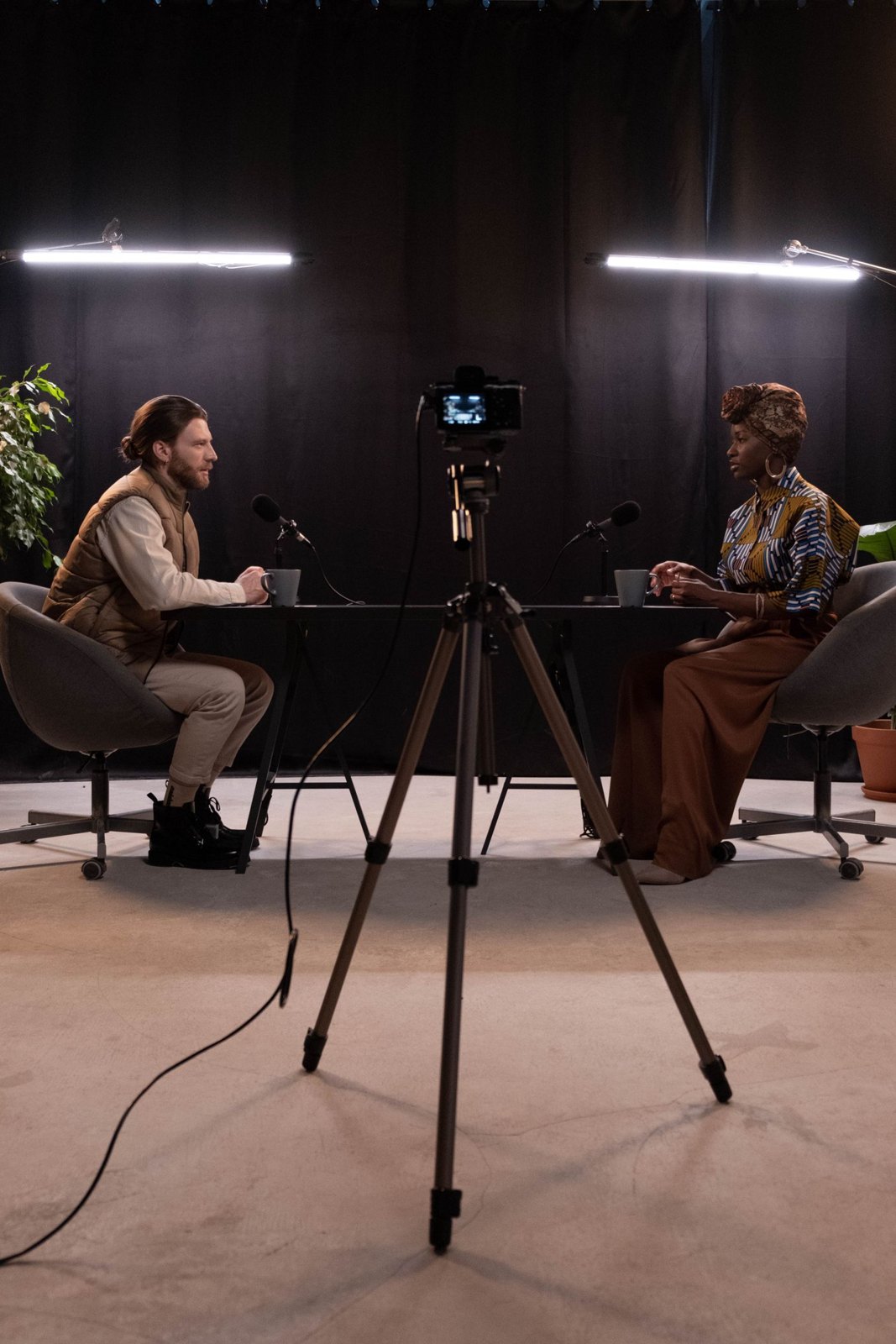
A podcast with cameras needs more than a decorative image of a microphone. Picture should help viewers understand people, reactions or objects being discussed. If an audio-only edition will also be published, that version should remain understandable. Plan both uses before extra equipment changes the conversation space.
Keep sound as the foundation
Position microphones for suitable recording conditions and natural conversation first. Do not move them far away merely because they appear in the frame. A well-placed visible boom arm may be preferable to an uncluttered image with poor sound. Check desk noise and changing speaking distance.
Where several people speak, retain separate recordings where possible. This makes later balancing easier. Record an understandable reference mix too where the workflow calls for it. Before starting, verify that stored tracks contain the intended sources rather than several copies of the same mixture.
Fit cameras around the conversation
One steady shared shot can already support a useful video edition. Additional individual angles help show reactions during longer discussions, but increase synchronisation and monitoring work. Choose camera count according to available attention and content rather than a desire to use more equipment.
Consider eyelines and obscured faces. Microphones, screens and drinks may look different from a camera position than from the seat. Test typical gestures and leaning forwards while listening. Check power, storage and potential recording interruptions for the intended conversation length as well.
Synchronise and edit deliberately
With separate recordings, establish a clear synchronisation reference and check both beginning and end after import. Long discussions can reveal problems absent in the first seconds. Preserve original files and record interruptions so missing passages are not discovered only during editing.
Change the picture for a recognisable reason: the speaker, an important reaction or an object being shown can justify a cut. Switching on every sentence soon feels mechanical. Hold shots long enough to preserve the conversation's rhythm.
Check both editions independently
When someone holds up an object, briefly describe it in words too. “This is the problem” remains incomplete for audio-only listeners. Add necessary context during editing without overwhelming the conversation with constant retrospective explanation.
Export audio and video from clearly organised sequences or mixes. Check each output for its beginning, ending, sound balance and unresolved visual references. The audio edition should not accidentally contain a long silent visual passage, while the video should retain reactions needed to understand the discussion.