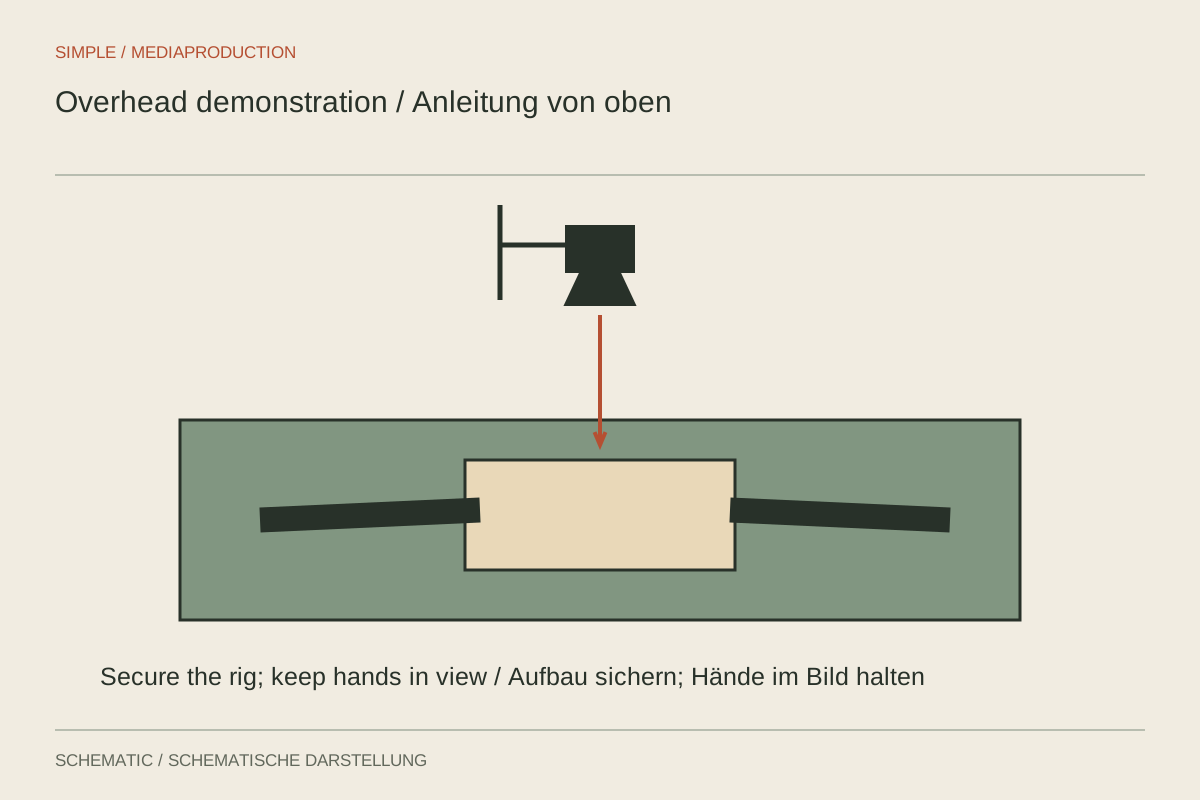
An overhead view suits flat objects, drawings and many tabletop tasks. It becomes confusing when hands cover the important detail or the surface shakes with every movement. Plan the setup around the complete action rather than an attractive stationary opening composition.
Start with the tabletop action
Lay out the required objects and rehearse the process without recording. Observe how far hands and tools travel. Discreetly mark the usable frame outside the eventual visible area. This lets the demonstrator work without checking a monitor for every movement.
Choose a support intended for the actual load and position, and follow its manufacturer's instructions. An extended mounting arrangement loads the system differently from a weight directly above a tripod. Improvised unstable supports over people, hot surfaces or valuable objects are not a useful shortcut. Check security before work begins underneath.
Isolate the setup from tabletop knocks where possible. A camera attached to the same table can visibly shake during tapping or forceful drawing. Record a test containing the strongest typical movement. A steady preview before the task begins will not reveal that problem.
Align the camera so the work surface remains understandable. In an intentional top-down view, rectangular paper need not appear unnecessarily skewed. Check focus at the actual working height; lifted objects may leave the sharp region. Record important details separately where that communicates them more clearly.
Check light, hands and sequence together
Move the hands through every important position and observe their shadows. Side lighting can reveal shape, but should not continually darken the critical contact point. With glossy materials, adjust the light or camera angle until the relevant surface remains visible. Test using the real material rather than a substitute.
Pause briefly between steps and deliberately place completed pieces where they belong. Viewers need time to recognise the result of an action. If an object must be turned over, show that movement or explain its new orientation. An unexplained cut can otherwise break the spatial relationship.
Record narration separately where simultaneous working and speaking unnecessarily complicate the process. The commentary must then match the visible steps accurately. Review the finished version without sound: the basic movement should remain understandable even where speech or text supplies additional information.